
Tartaria’s Final Chapter
Deconstructing the Birth of the New World Order

It really is quite remarkable, dear reader, to look at the sheer volume of the records we have been tracking.
We’ve looked at a paper trail that spans hundreds of years, original letters and internal correspondence stretching from the 13th century straight into the 19th.
These are raw, clinical records that flatly contradict the sanitised history we were all fed in the classroom.
Let it be understood:
the National Archives and the Royal Society are not fringe sources, curious mind
These are the foundational pillars of the British historical establishment.
Yet, the system ensures that the physical truth remains buried in plain sight.
You cannot simply view these files online; they do not exist in the digital ether.
To see the original folios in person, you cannot just turn up on a whim.
You must pay a fee, apply for a permit, undergo vetting to be approved for the specific items, arrange a date, and pay an unspecified sum just to have the pages photocopied, assuming your request isn't denied.
They have built a massive bureaucracy around these documents, designed to ensure that the average man never thinks to look behind the curtain.
Yet, they’ve neglected something.
While the physical vault doors require a permit to crack, the official administrative descriptions of this hidden correspondence are left exposed.
And those summaries alone are more than enough to reveal the chasm.
They prove that a massive, sovereign piece of our past has been systematically severed from the modern narrative.
As we approach the conclusion of this series, we shall cast our gaze over the next chronological link in the chain.
These records reveal to the modern mind exactly how the slow, cold-blooded liquidation of Tartaria was executed.
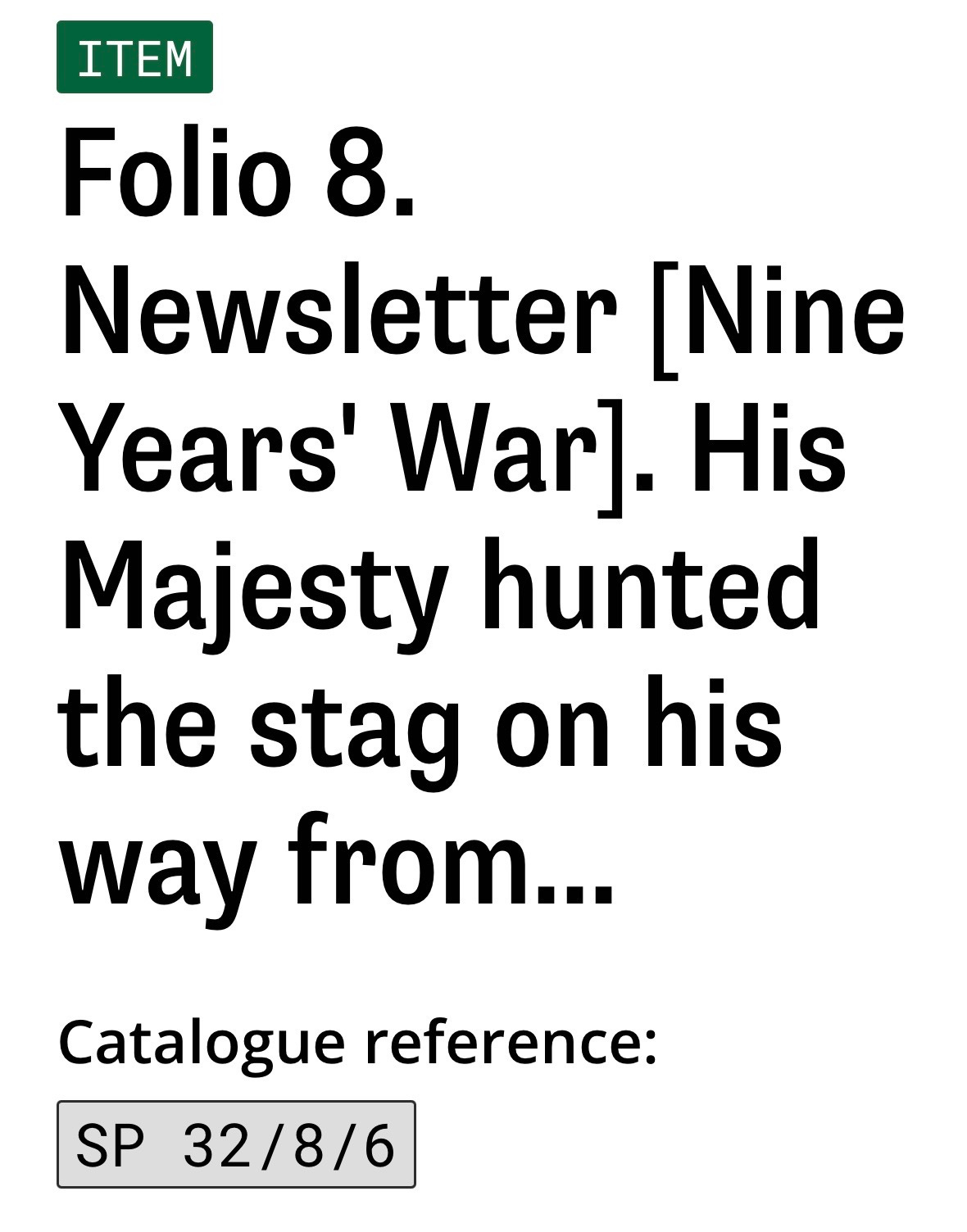
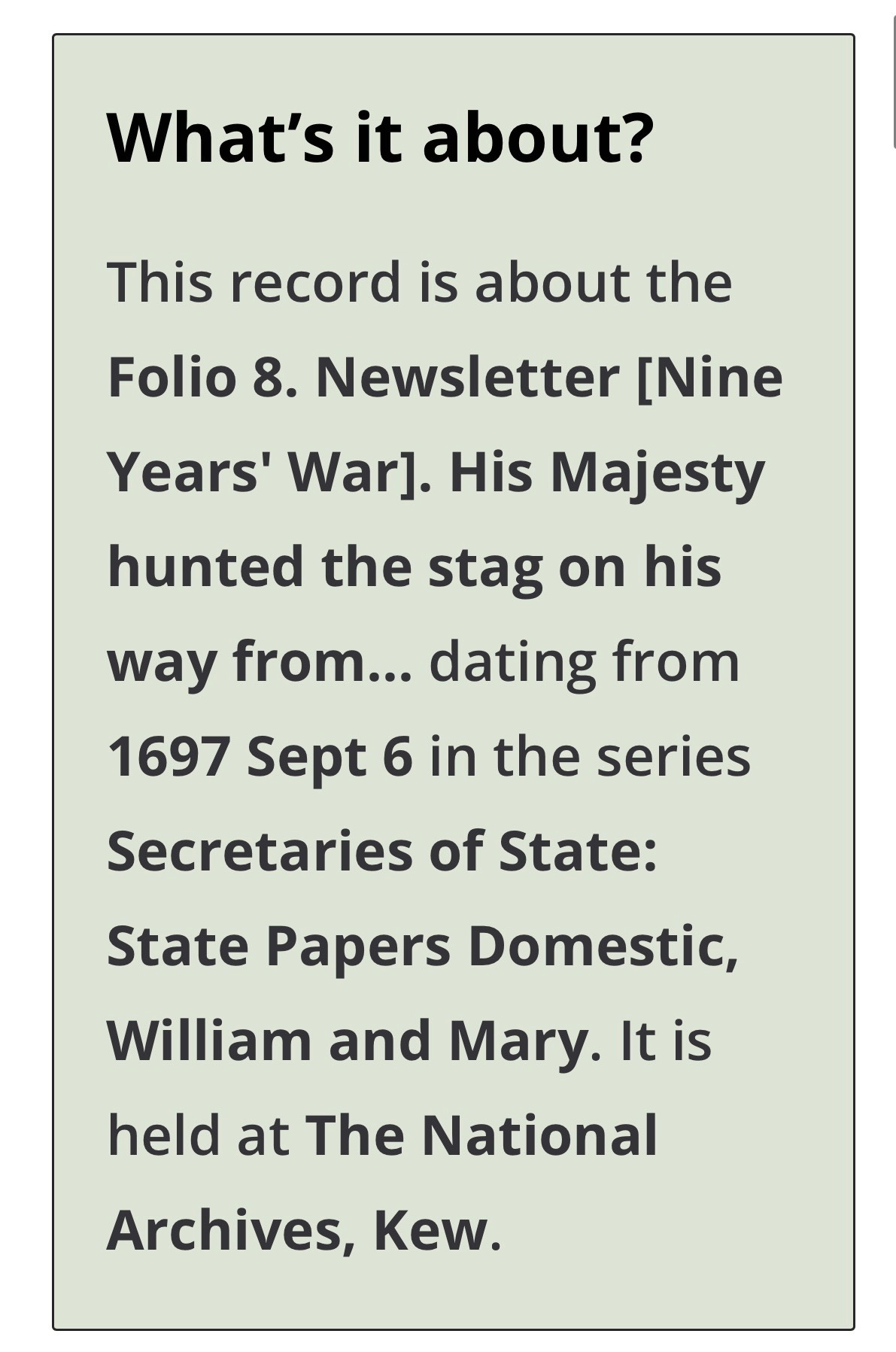
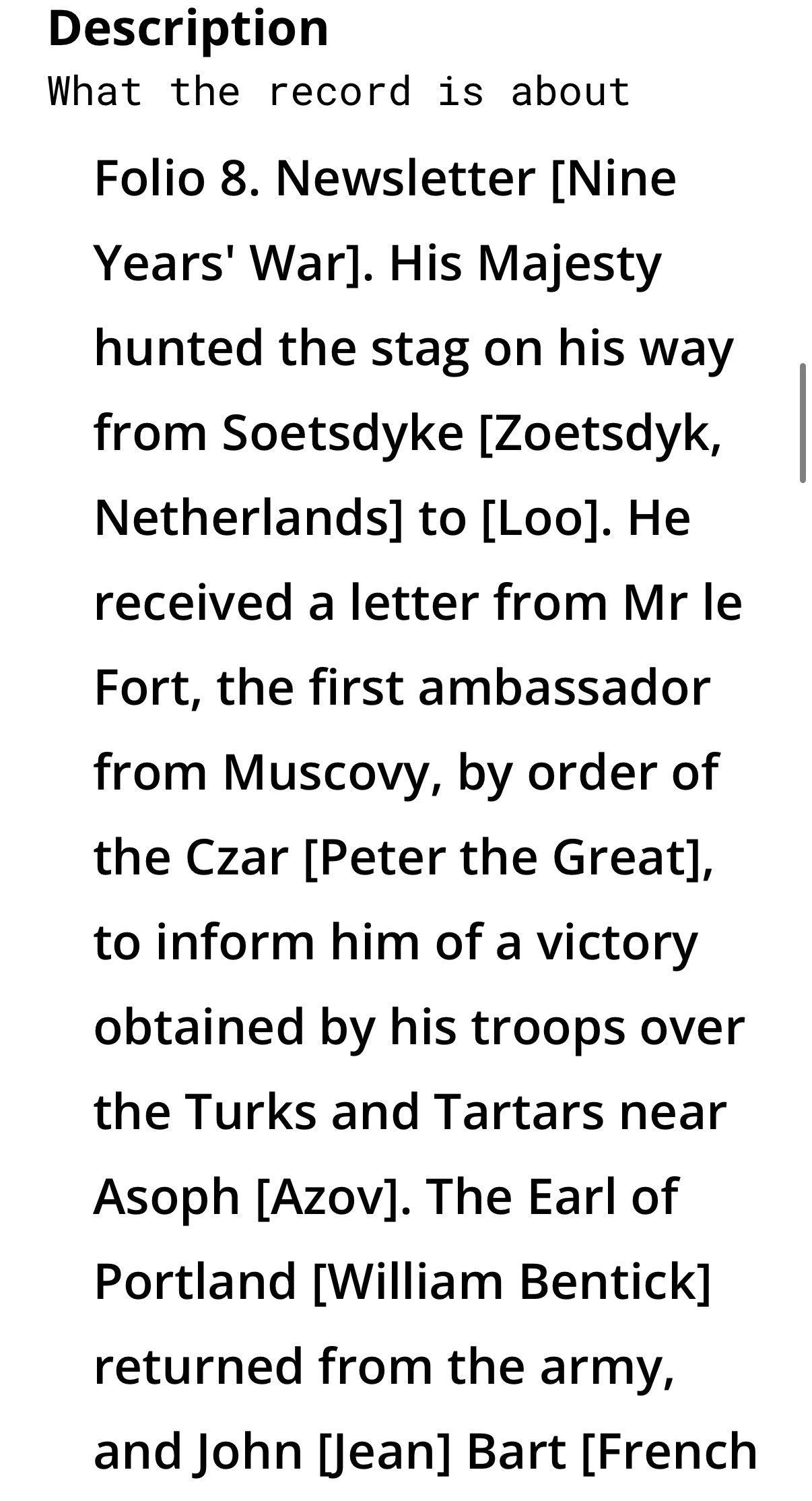
We begin with Folio 8 (Catalogue reference: SP 32/8/6), dated September 6, 1697.
This is a domestic newsletter from the secretaries of state during the final months of the Nine Years' War, held within the National Archives at Kew.
It documents a reality split down the middle, a world where the Western elite amuse themselves in the sun while the final anchors of the old world are violently broken in the mud of the East.
The text reads with the sickening, casual detachment of high aristocracy.
We are told that His Majesty, King William III, was leisurely hunting the stag on his way from Soestdike to his palace at Loo in the Netherlands.
It is a scene of domestic tranquility, a picture of a new order so completely confident in its grip that its monarchs can spend their afternoons chasing game through the private northern forests.
But look at the intelligence packet waiting for him when the hunt concluded.
While the King was riding through the Dutch countryside, a courier arrived bearing a letter from Francois Lefort, the premier ambassador from Muscovy, sent by direct order of the Czar, Peter the Great.
The contents of the letter were not a casual greeting; it was a clinical confirmation of blood and liquidation.
Lefort was writing to officially inform the British crown of a massive victory obtained by his troops over the Turks and Tartars near Asoph.
Think about the psychological warfare of this arrangement, curious mind.
The textbooks teach us that these conflicts were separate, regional skirmishes, unconnected clashes on a disorganised map.
But the internal state papers expose a unified, global apparatus.
The Romanov Czar does not just win a battle on the Don River and keep it to himself; his inner circle immediately sends high-level diplomatic dispatches straight to the King of England's hunting lodge in the Netherlands to verify the structural damage done to the Tartar-Turk alliance.
This is the exact moment the blueprint of the New World Order hardens into place.
The old Tartar sovereignty was being systematically hammered on the battlefield by the emerging Romanov empire, while the Western grandees monitored the execution from their manicured gardens.
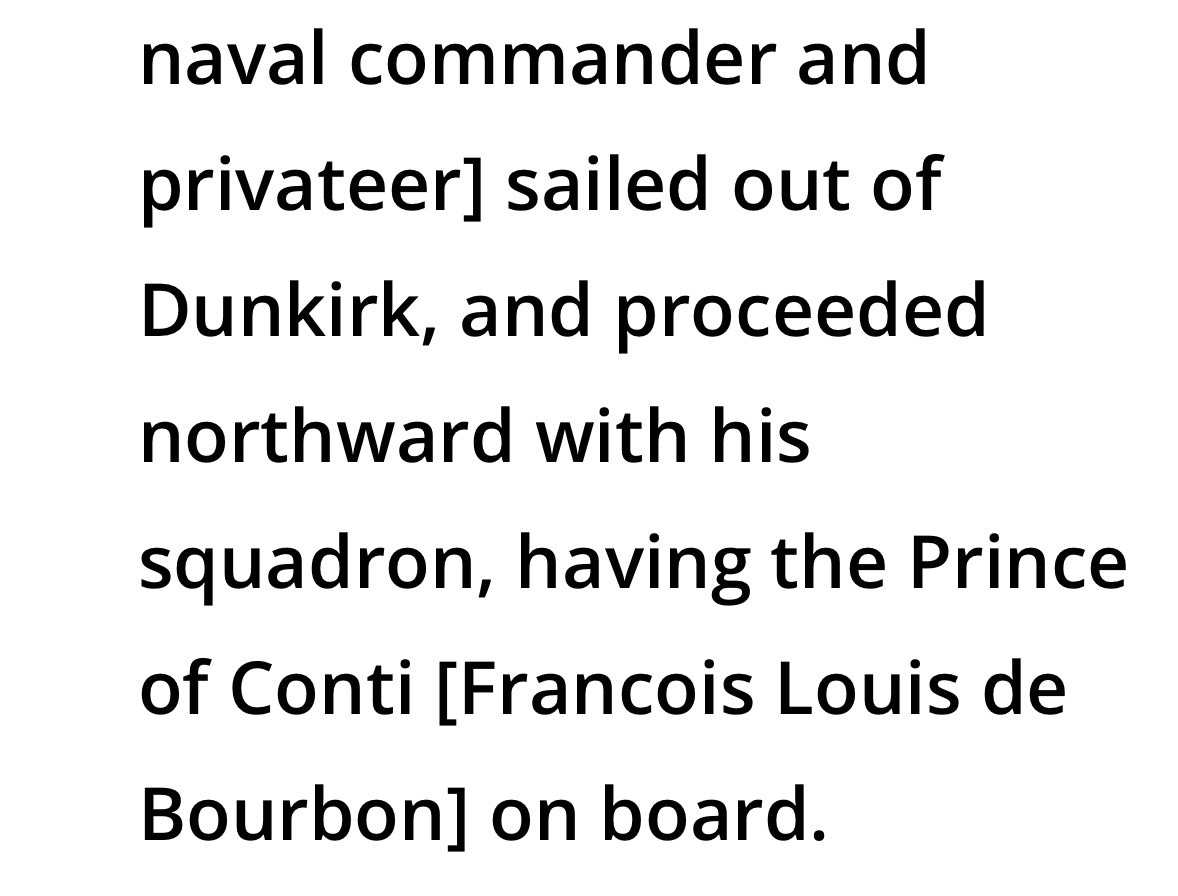
The record closes by noting that the Earl of Portland had returned from the frontline armies, while Jean Bart, the notorious French naval commander, was slipping out of Dunkirk with the Prince of Conti on board, sailing northward under the cover of a fractured Europe.
They kept the public gaze transfixed on the theatre of the West, ensuring the masses were looking at the stag hunts and the naval manoeuvres of Flanders, while the true sovereign anchors of Eurasia were being clinically eradicated at the gates of Azov.
The next reference shifts our timeline into the opening decades of the 18th century.
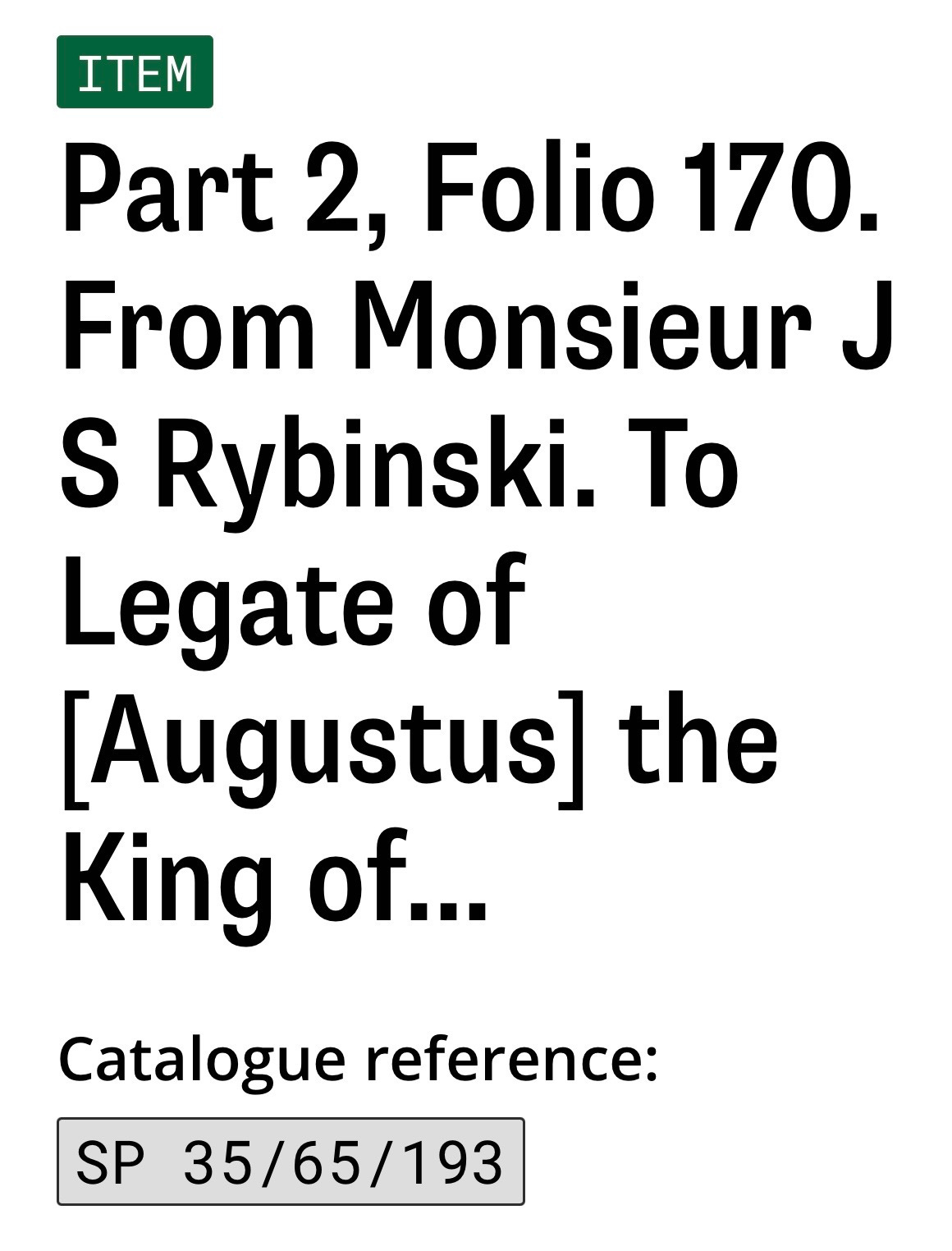
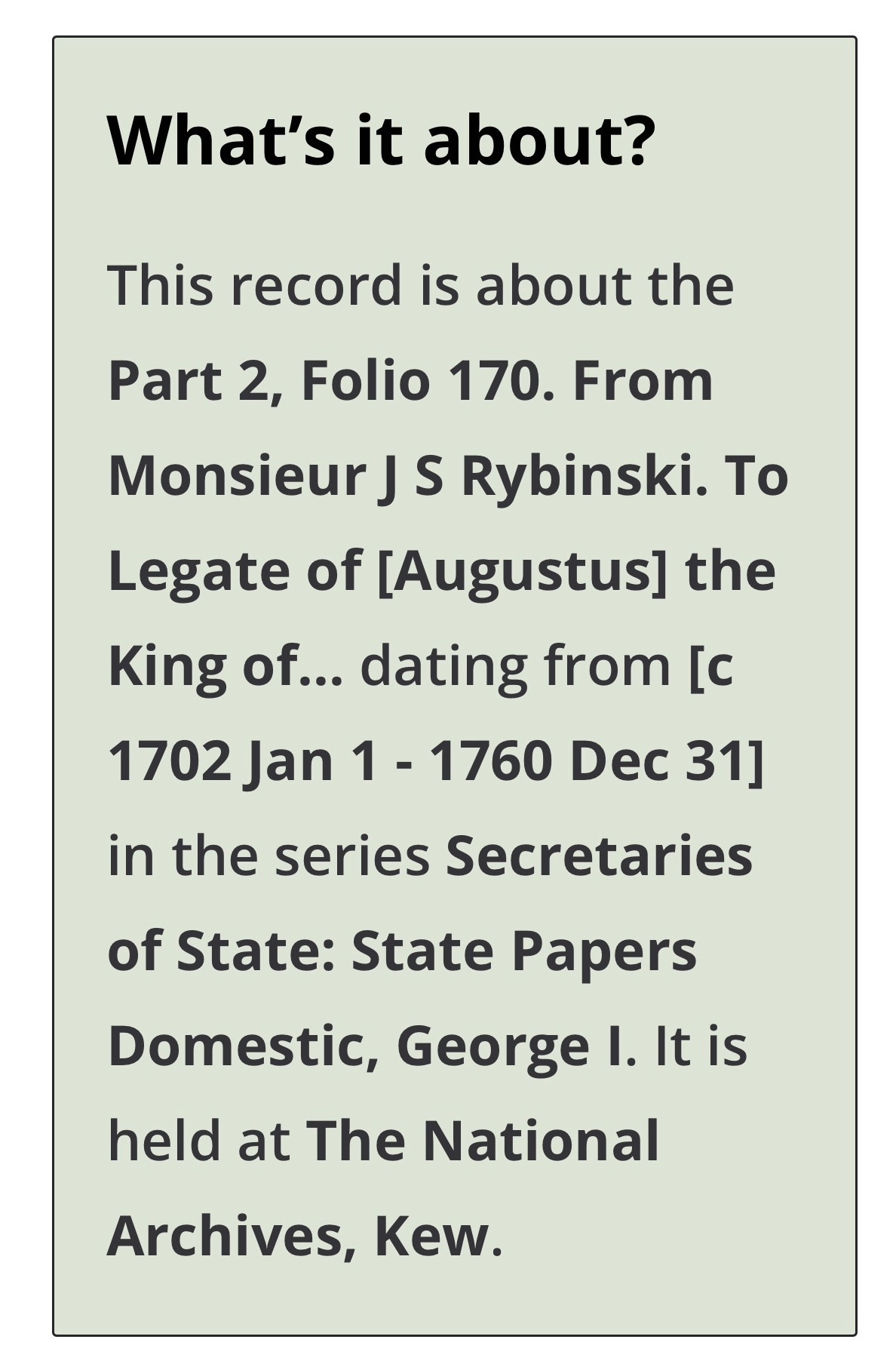
From the State Papers Domestic, George I, Catalogue Reference SP 35/65/193, held within the secure vaults at Kew.
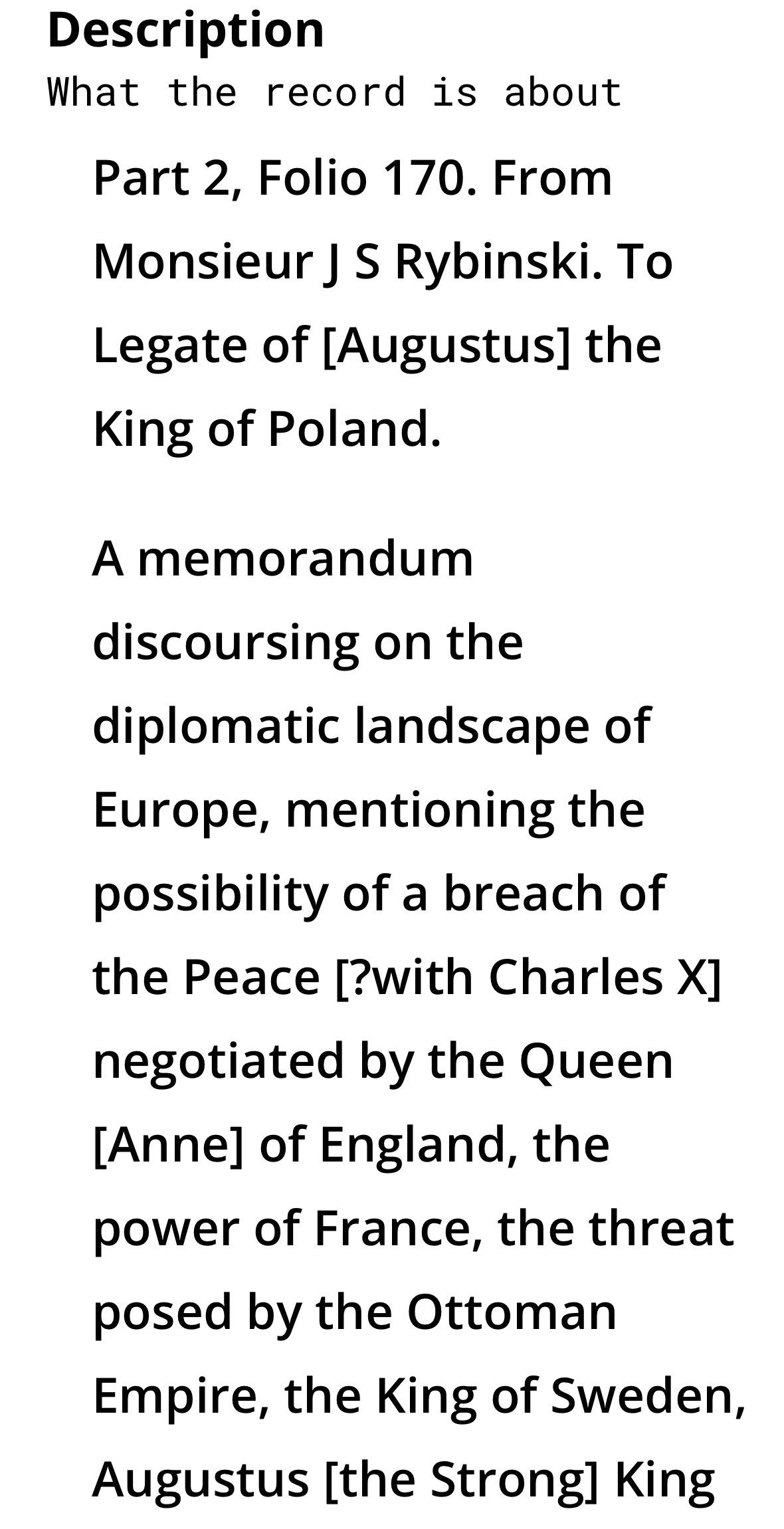
Folio 170, a diplomatic memorandum from Monsieur J. S. Rybinski, addressed directly to the Legate of Augustus the Strong, the King of Poland.
The public narrative teaches us a very specific, comfortable lie to explain away the old maps.
We are told that Tartaria was never a real empire, but a vague geographic blanket label, a poorly understood expanse of lawless, disconnected nomadic tribes that cartographers filled in out of ignorance.
But look at the clinical ink of the establishment’s own internal index.
Rybinski is not using a vague geographic placeholder; he is discoursing on the highly specific macro-political landscape of the entire continent.
Read the precise breakdown of the sovereign entities tracked in this singular memorandum:
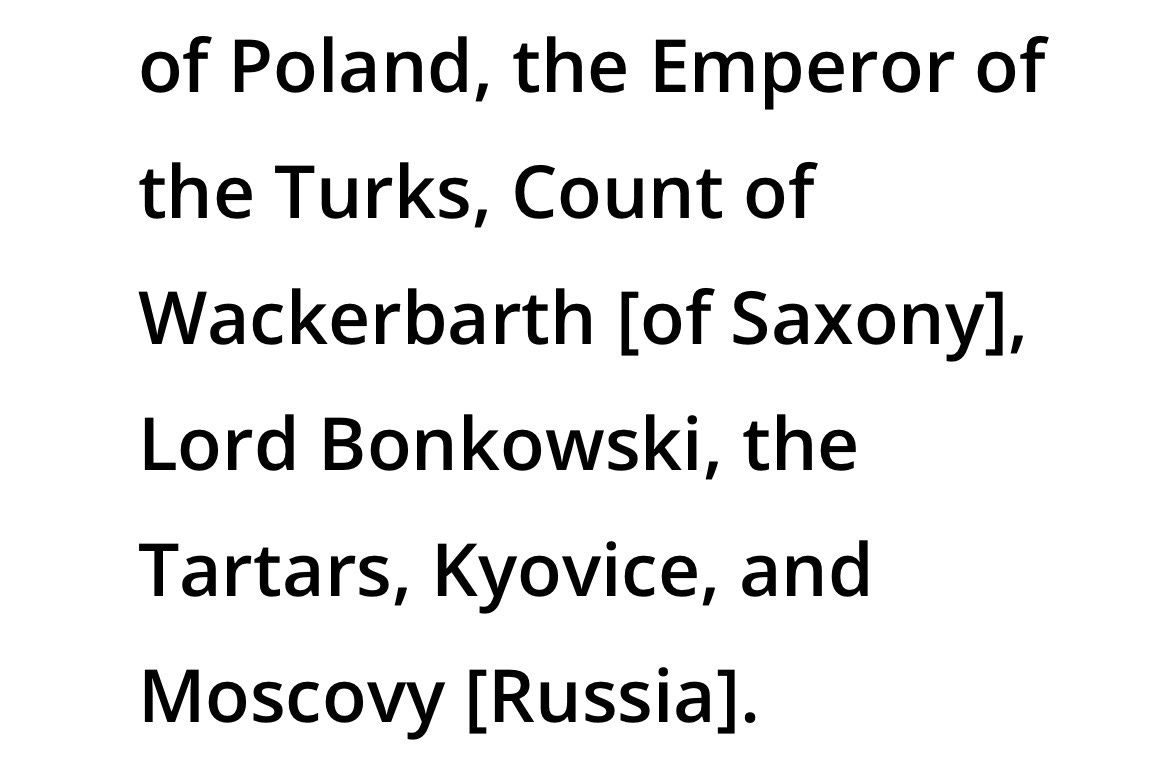
the Queen of England, the power of France, the King of Sweden, the Emperor of the Turks, Moscovy, and the Tartars
Think about the profound implications of this alignment, curious mind.
The British state papers are recording a high-stakes chess match where the Tartars are categorised not as a loose collection of roaming tribes or a cartographic shortcut, but as a distinct, sovereign variable holding equal political weight with the absolute titans of the Western world.
They are sitting on the exact same board where the actual Peace of Europe is being negotiated, balanced, and threatened.
The document details the frantic maneuvering to manage a potential breach of peace involving Charles XII of Sweden and the Ottoman Porte.
You do not factor a poorly understood geographic area into tactical wartime diplomacy alongside Russia, France, and England.
They tracked them because they knew this sovereign presence still held the concrete geopolitical mass to disrupt the blueprint of the New World Order.
They met them as structural peers in the backrooms of old nobility, while preparing the very academic narrative that would later reclassify them as a geographic myth.
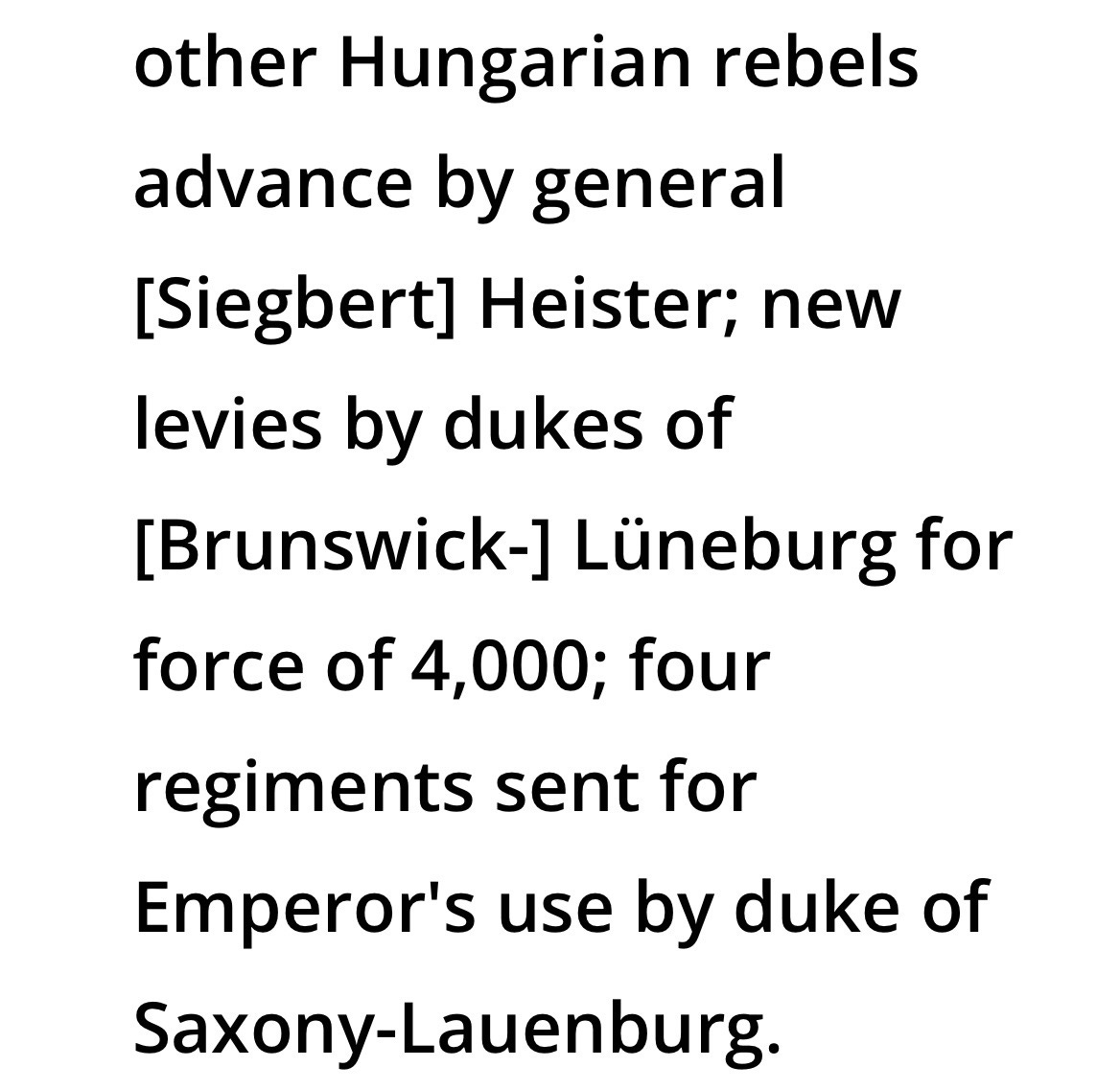
The next piece of the puzzle takes us to a document flagged with a highly telling admission by the modern archivists themselves.
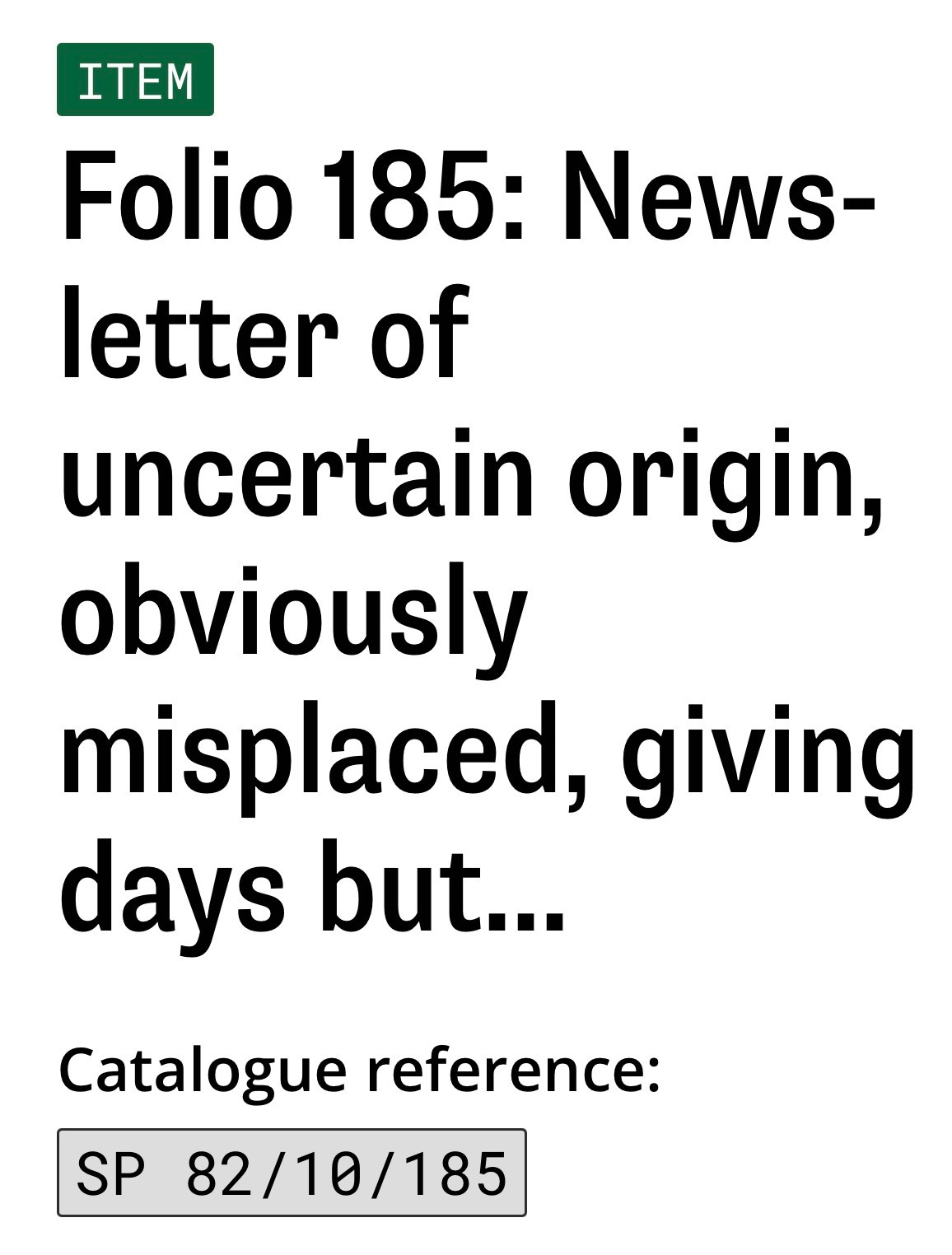
We are looking at State Papers Foreign, Hamburg and Hanse Towns, Catalogue Reference SP 82/10/185.
This is Folio 185, a raw news-letter dating from 1704.
Notice the heavy institutional hand in the official description:
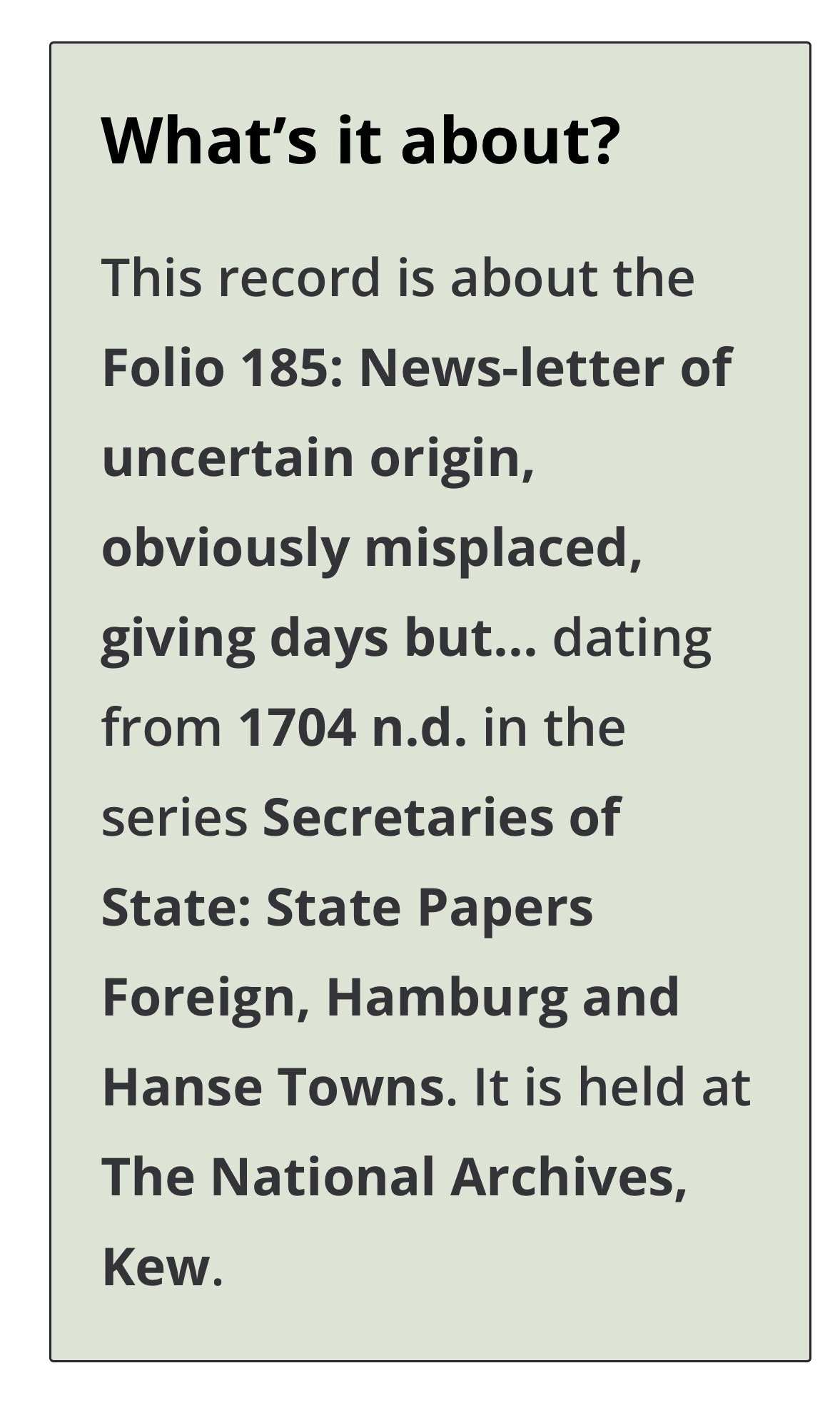
they call it a document of uncertain origin, obviously misplaced
When the establishment encounters raw data that completely scrambles their synchronised timeline, it is simply dismissed as an administrative error.
A clerical oversight.
But look closer at what this misplaced intercept actually contains.
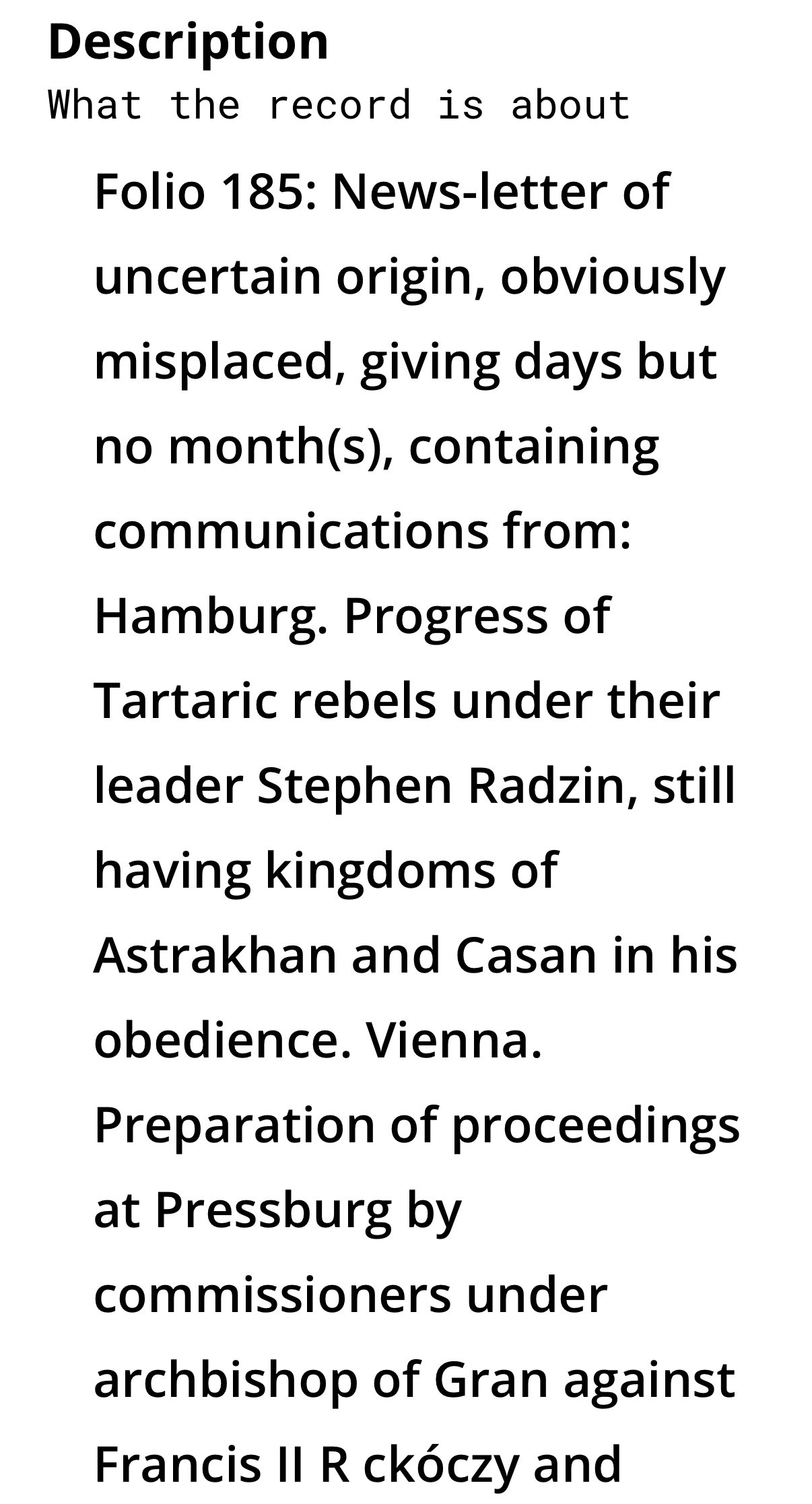
It tracks highly sensitive intelligence flowing out of Hamburg regarding the Progress of Tartaric rebels under their leader Stephen Radzin, still having kingdoms of Astrakhan and Casan in his obedience.
Curiously, the document names them Tartaric, not tartar.
I assume the original text read Tartarian, and it was misspelled upon writing the description.
The official narrative claims that the entire Volga region and the kingdoms of Astrakhan and Kazan had been thoroughly conquered, absorbed, and Russified by the Romanovs over a century prior to this document.
They tell us that any local resistance was just disconnected, peasant unrest.
Yet here, in 1704, internal European intelligence communications are tracking a massive, unified military campaign led by Stephen Radzin.
They don't refer to Radzin as a localised bandit or a peasant insurgent.
They explicitly state that he has entire kingdoms, Astrakhan and Kazan, in his obedience.
Even more damning is the name itself.
Mainstream history knows a Stenka Razin who led a massive rebellion in that exact region, but they claim he was captured, tortured, and brutally executed in Moscow in 1671.
Why then is British foreign intelligence tracking the terrifying military progress of a Stephen Radzin in 1704, more than thirty years after he was supposedly erased from the earth?
They didn't just misplace a letter, curious mind.
They misplaced an entire timeline.
They are tracking an active, independent Tartarian power structure holding sovereign dominion over vast kingdoms, operating completely outside the control of the Western empires at the exact moment the history books claim they were already subjugated.
The mechanics of the narrative shift are laid bare right here:
when the physical documents refuse to comply with the manufactured timeline of the New World Order, the gatekeepers simply brand them as misplaced and hope you never think to cross-reference the names
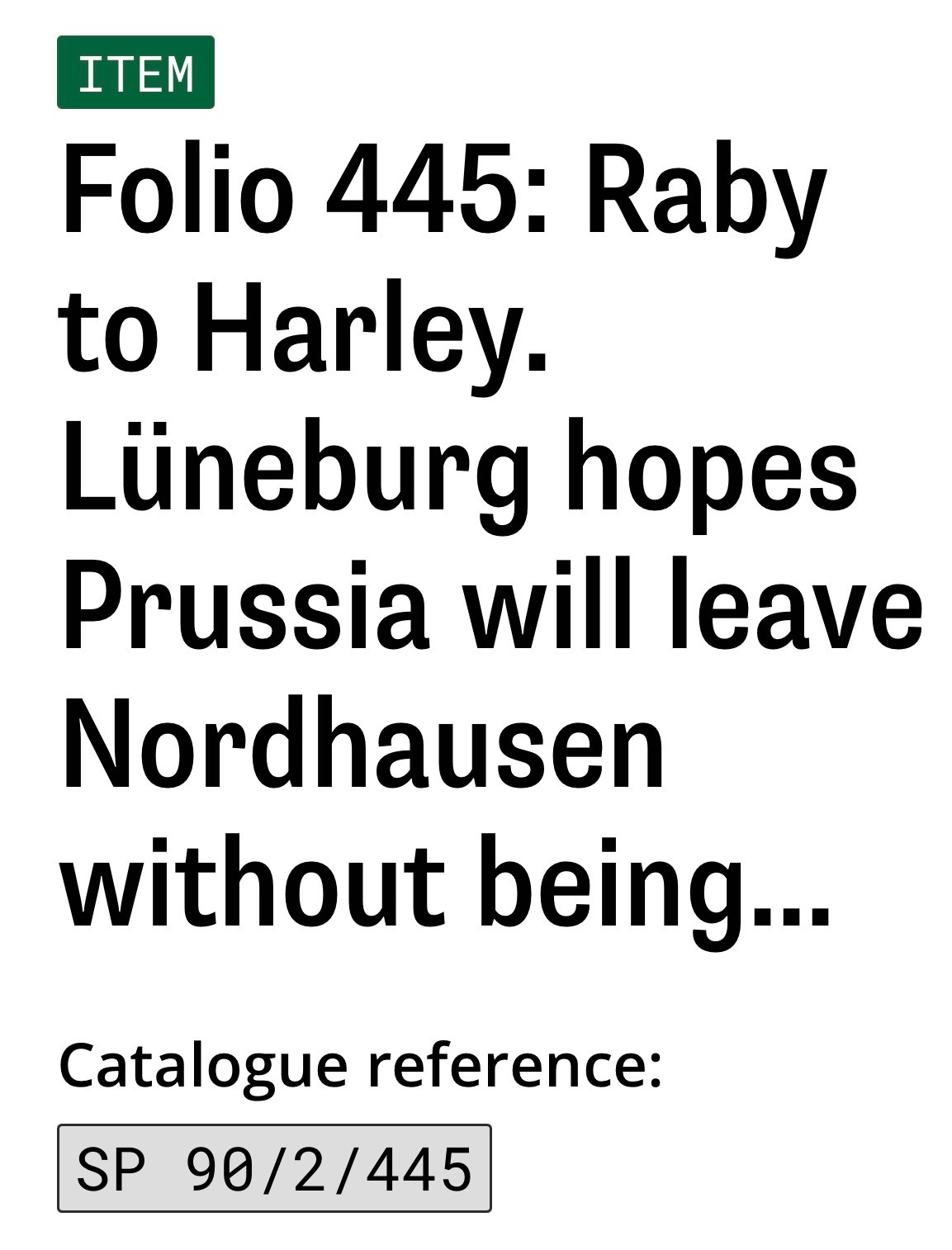
The next crucial link in the chain comes from an entirely different sector of European intelligence, reinforcing the exact same reality.
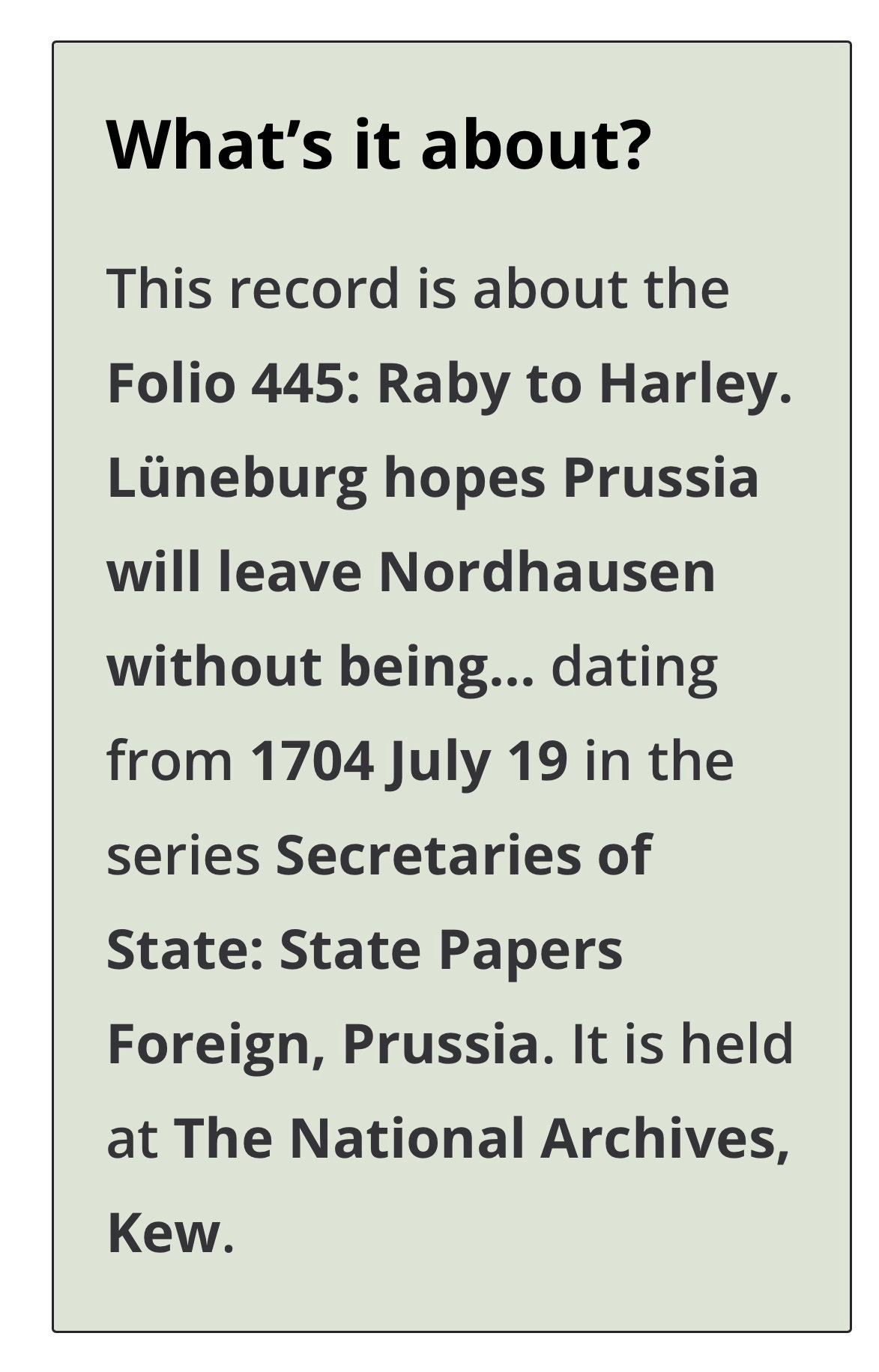
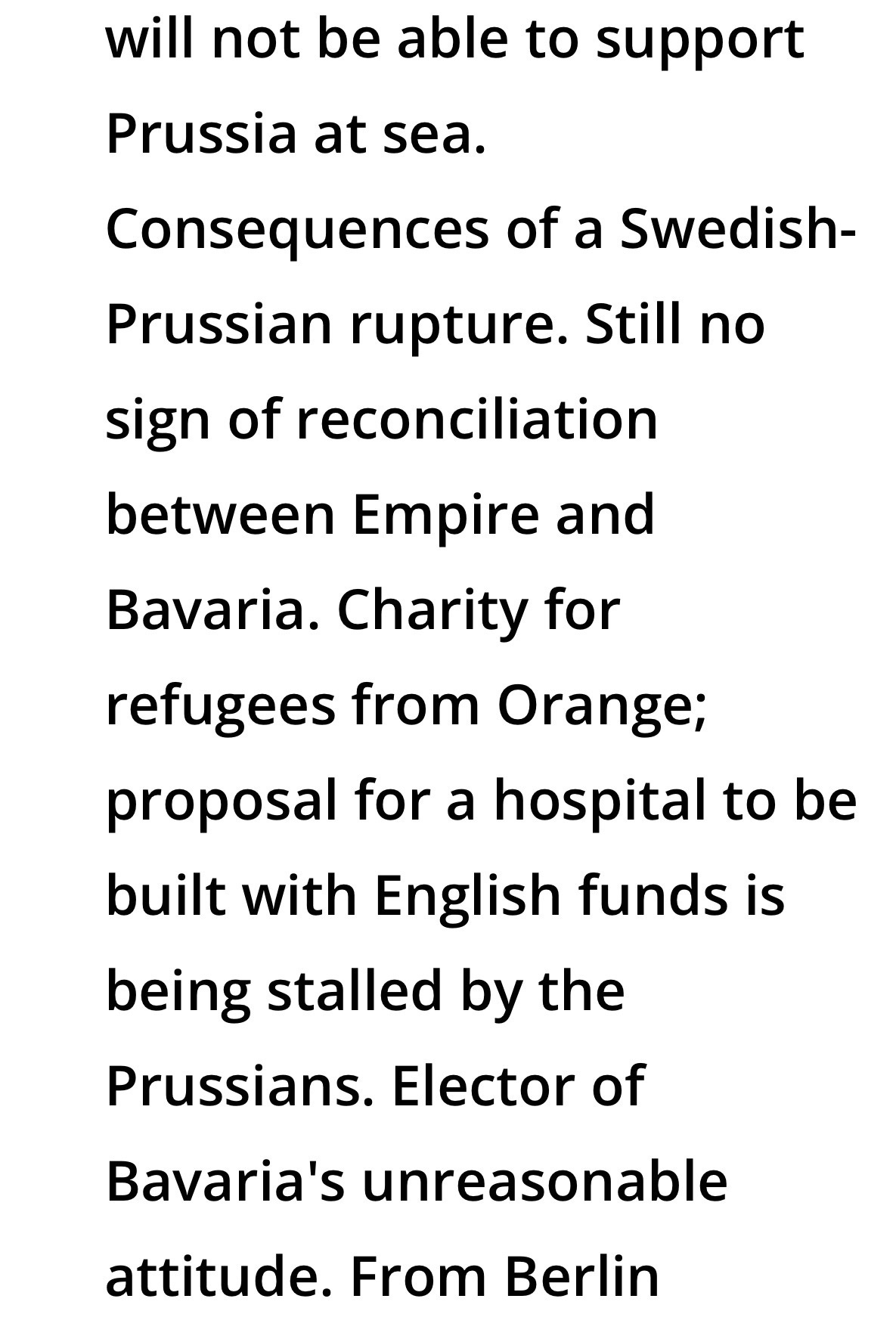
This is another State Papers Foreign, this time Prussia, Catalogue Reference SP 90/2/445.
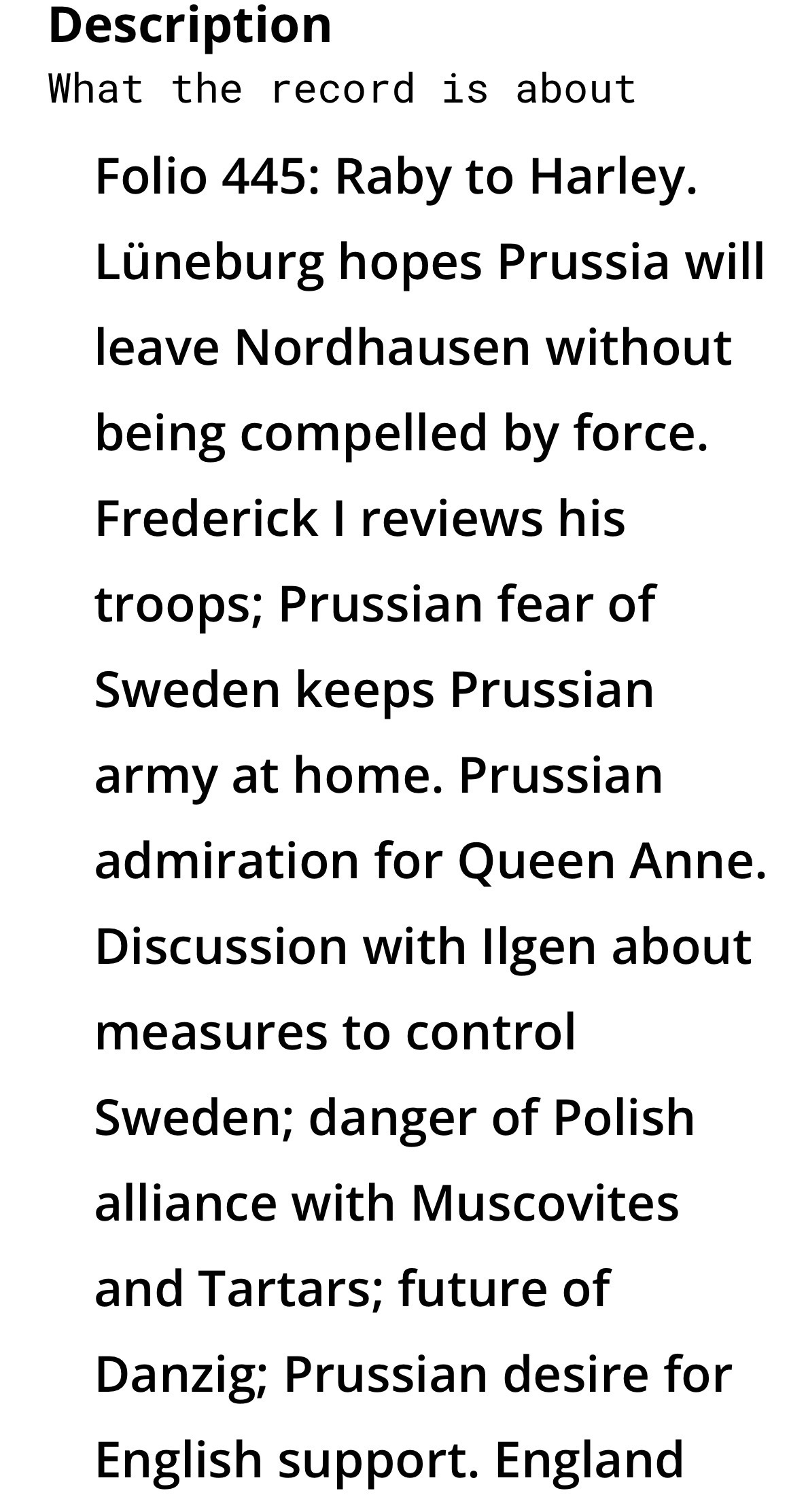
Folio 445, a direct communication from Raby to Harley, dispatched straight from Berlin on July 19, 1704.
On the surface, the gatekeepers frame these archives as routine diplomatic correspondence regarding European maneuvers during the War of the Spanish Succession.
But when you look past the distractions of Prussian troop reviews and disputes over Danzig, the raw intelligence reveals the geopolitical landscape they desperately try to conceal.
Deep within the official summary of this intercept, the text notes an urgent discussion with Prussian statesman Heinrich Rüdiger von Ilgen regarding measures to control Sweden.
Right alongside this, it flags a massive, looming threat to their entire regional strategy:
the danger of Polish alliance with Muscovites and Tartars
In these letters, held by the British Secretary of State, the Tartars are treated as a distinct, sovereign, and terrifyingly viable military power structure.
The Western establishment wasn't tracking minor tribal skirmishes.
They were tracking a highly organised independent force capable of entering a formal, multi-nation military alliance with Poland and the Muscovites.
It proves that at the exact moment the history books claim these territories were subjugated and erased, the independent Tartar power structure was actively commanding the attention of the highest levels of European intelligence.
They didn't just misplace a timeline; they hid the true players on the global stage.
Shifting the focus forward three years, a new piece of evidence appears within the State Papers Foreign, Russia, under Catalogue Reference SP 91/4/89.
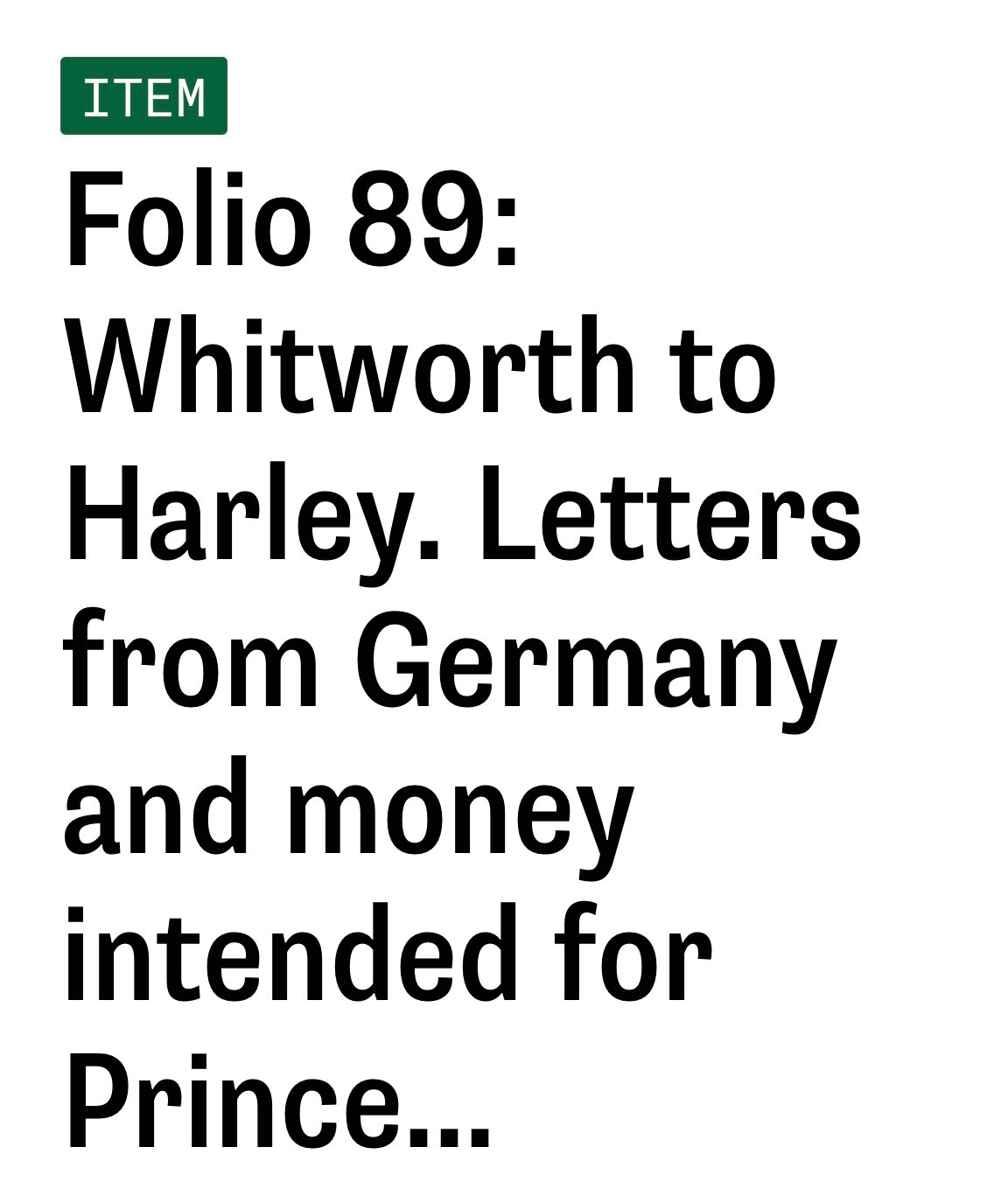
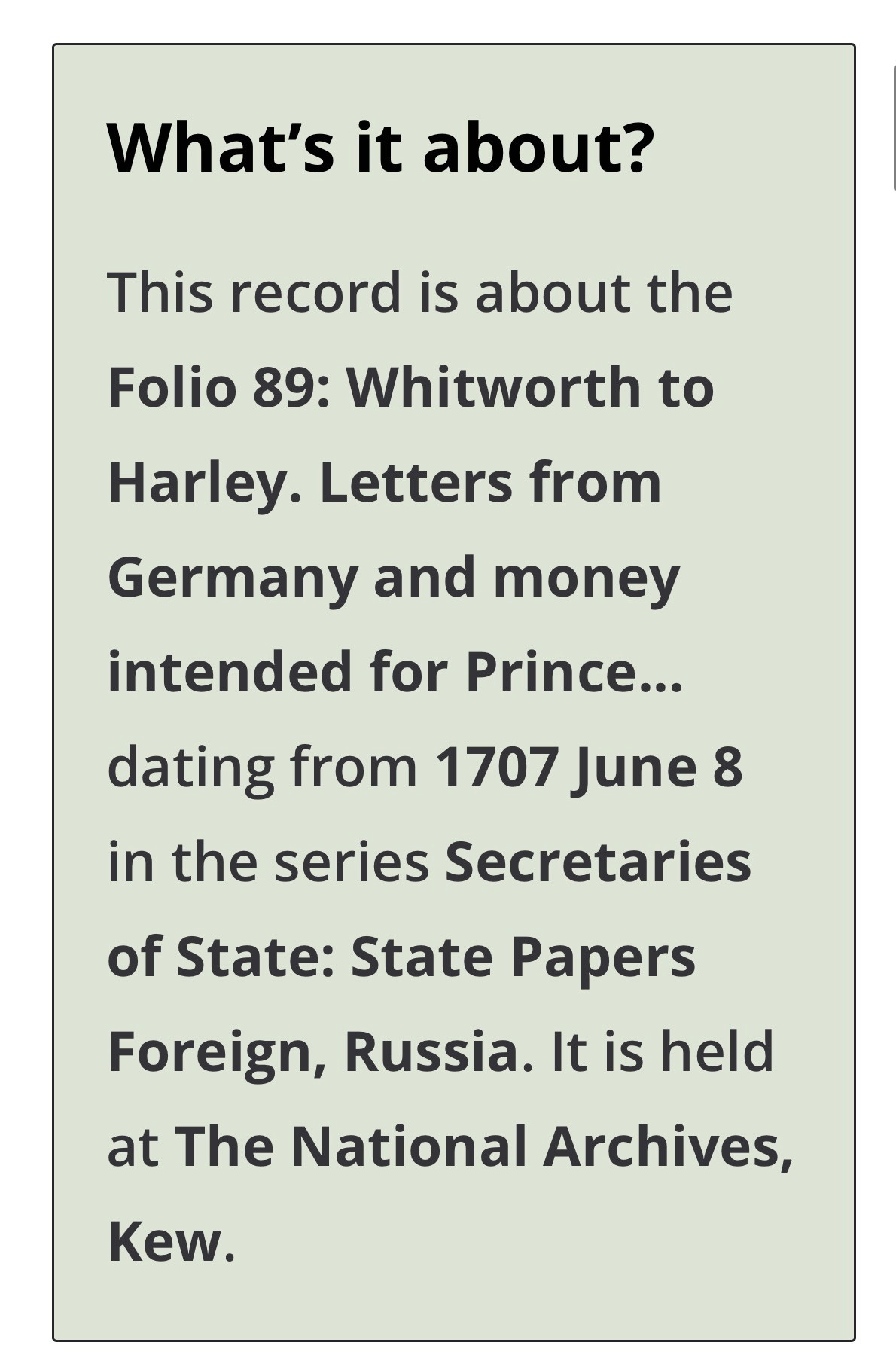
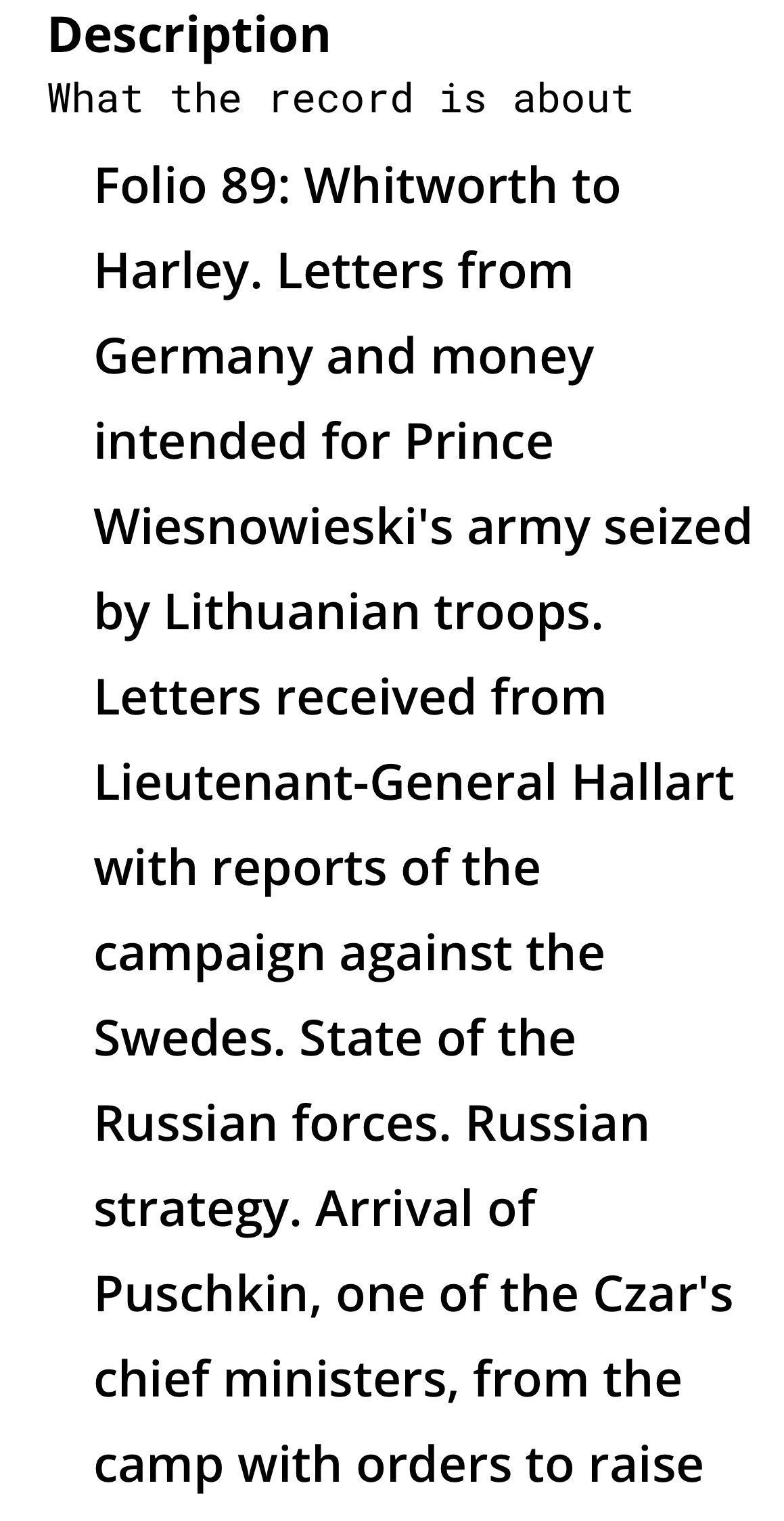
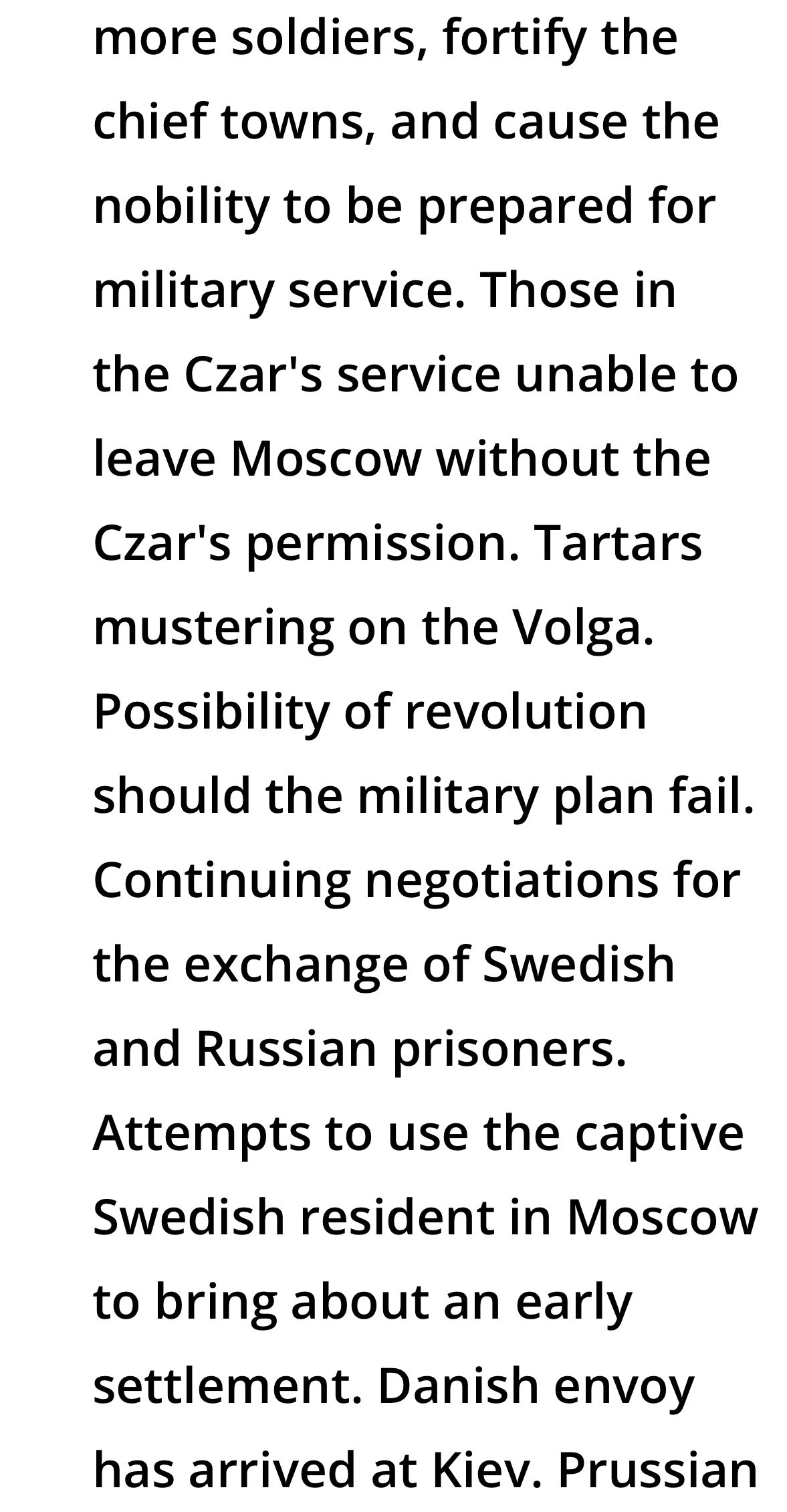
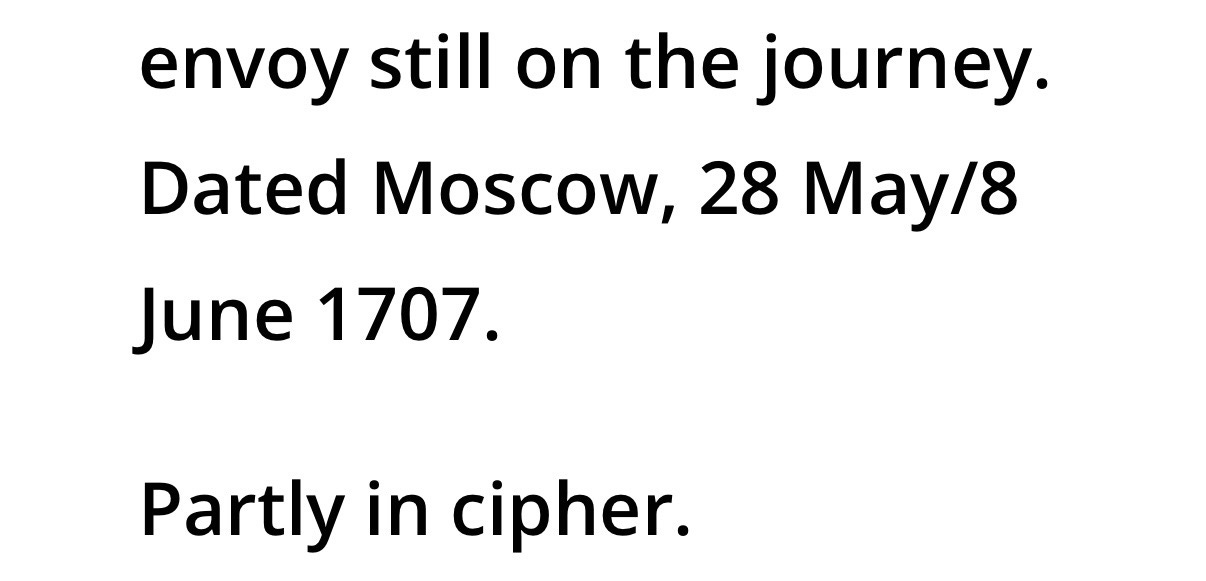
This record contains Folio 89, a dispatch from British diplomat Charles Whitworth to Robert Harley, dated from Moscow on June 8, 1707.
The summary explicitly notes that the document was sent partly in cipher, indicating the sensitive nature of the intelligence being transmitted back to London during the Great Northern War.
The core of the description outlines the high stakes confronting the Russian state at that moment.
Whitworth reports on the arrival of Puschkin, one of the Czar’s chief ministers, who brought urgent orders to raise more soldiers, fortify chief towns, and prepare the nobility for military service.
The domestic situation under Peter the Great was incredibly strained, with those in the Czar's service restricted from leaving Moscow without explicit permission.
Crucially, right alongside these desperate defensive measures, the document flags a major security threat developing on the frontier:
Tartars mustering on the Volga
According to standard historical accounts, the Volga region had been fully integrated under Russian imperial control long before this period.
Yet, the intelligence report underscores the severe vulnerability of the Romanov regime by stating there was a distinct possibility of revolution should the military plan fail.
The fact that Tartar forces were massing along the strategic Volga river corridor at the exact moment the Russian army was fully occupied with the Swedish invasion shows they remained an independent, highly volatile military threat.
Rather than being completely subdued, these populations possessed the numbers and positioning to potentially trigger a total collapse of the Czar's authority from within.
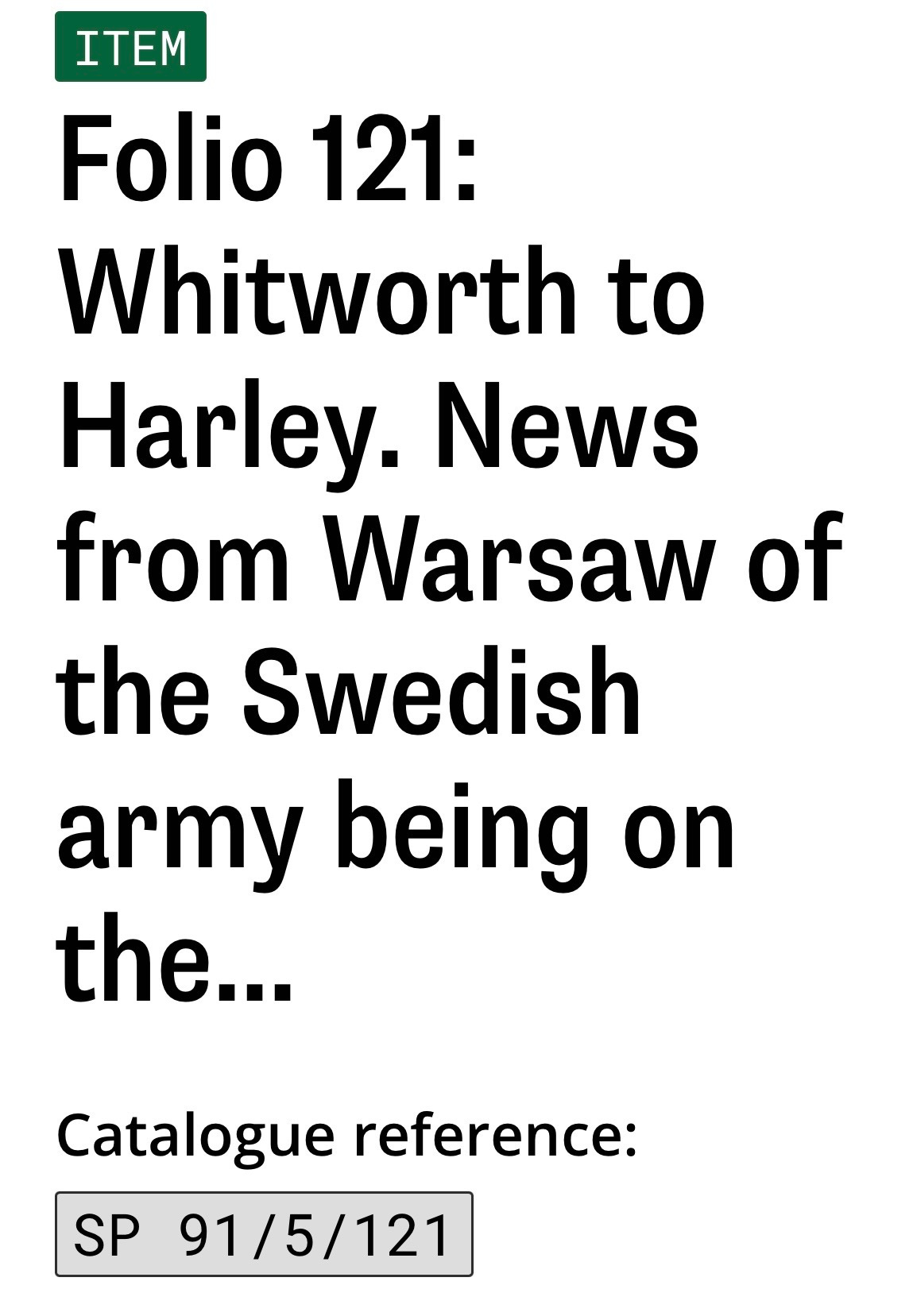
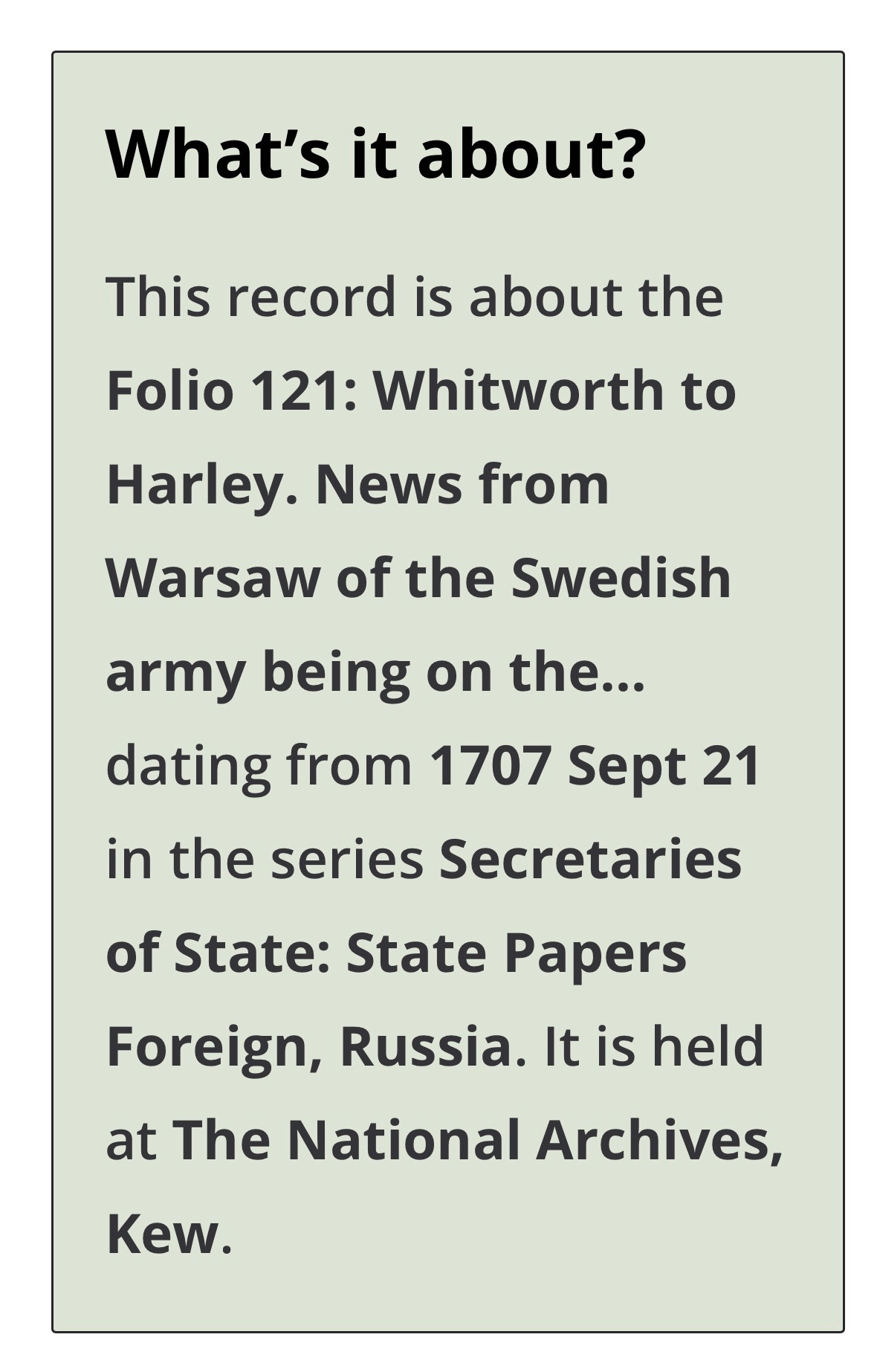
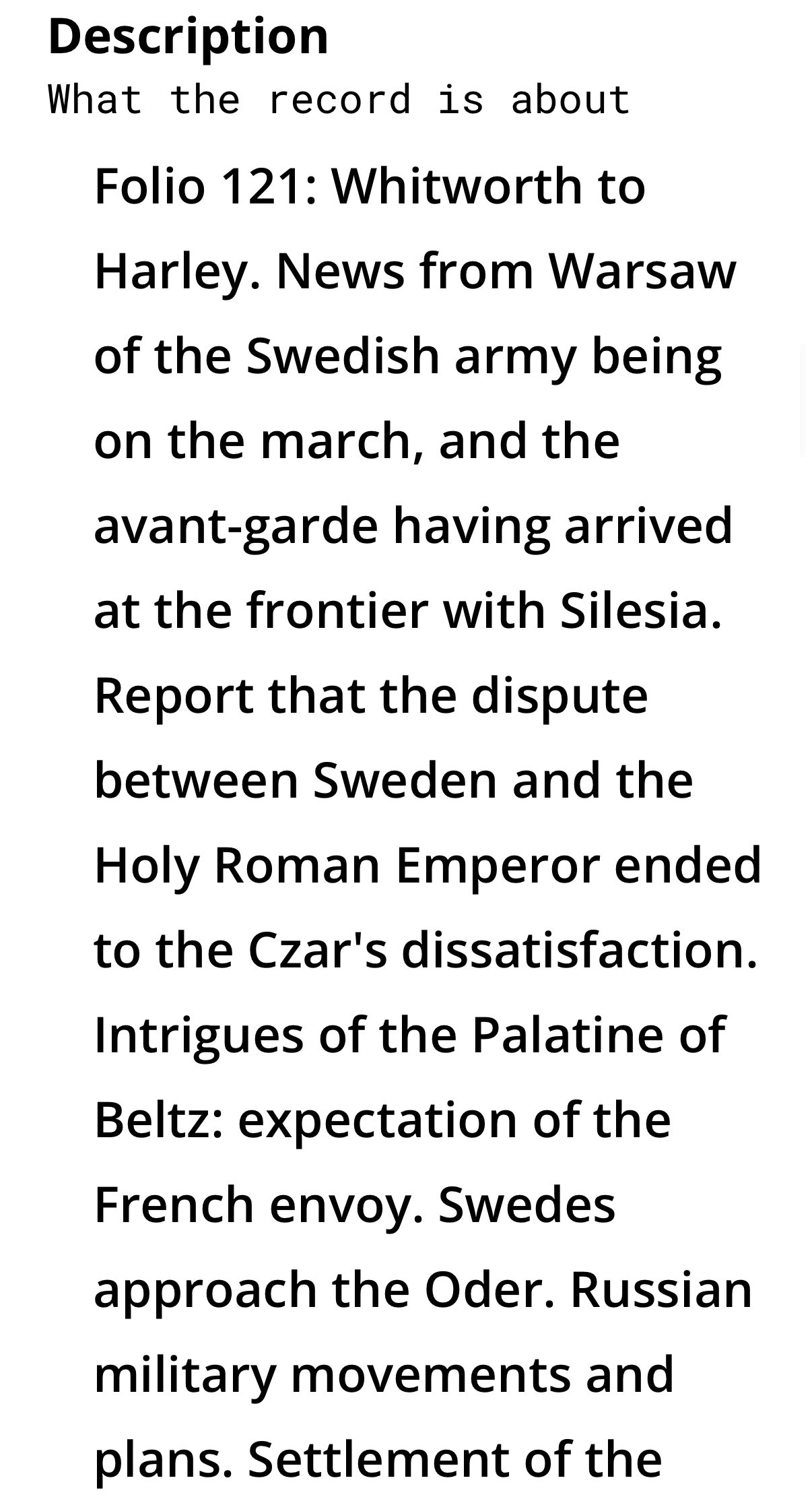
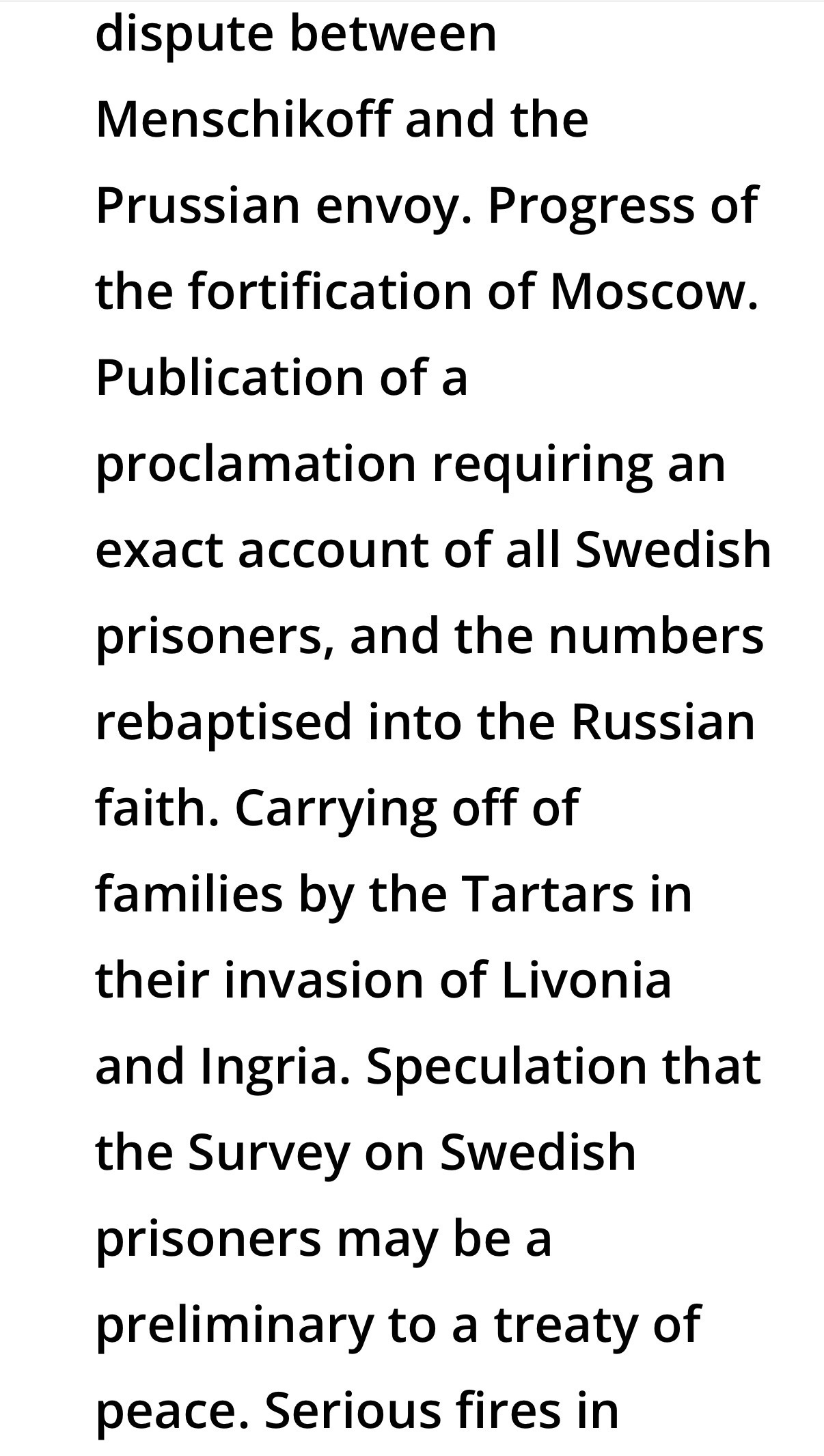
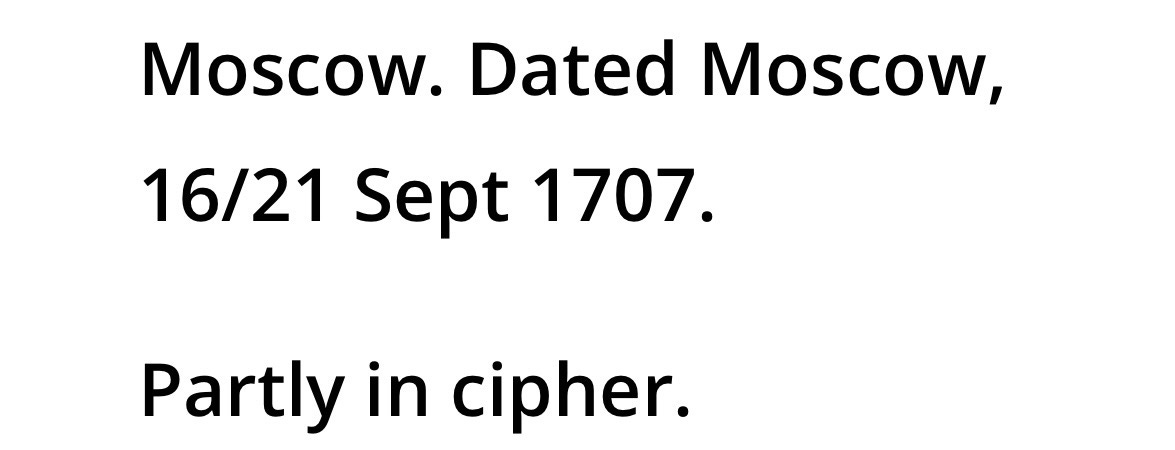
This evening's final reference brings us to a dispatch from Charles Whitworth to Robert Harley, dated from Moscow on September 16/21, 1707, adding another layer to the map.
This record, cataloged as Folio 121 under reference SP 91/5/121, sits within the State Papers Foreign for Russia, capturing a highly volatile moment during the Great Northern War as Swedish forces marched toward the Russian frontier.
Amidst updates on Swedish troop movements, the fortification of Moscow, and reports of serious fires burning within Moscow itself, the description highlights a devastating military action on the Baltic frontier:
the carrying off of families by the Tartars in their invasion of Livonia and Ingria
Mainstream historical summaries often depict the Tartars during this era as a distant, southern power primarily focused on the Black Sea steppes.
Yet this intelligence report places them directly in northern territories, Livonia and Ingria, deeply embedded within the broader geopolitical conflict between Sweden and Russia.
Again, this entry also explicitly notes that this specific dispatch was written partly in cipher, showing that British diplomats treated these regional movements with a high level of security.
Far from being a localised or completely subdued population, these groups were actively conducting major, disruptive invasions that forced the surrounding empires to encrypt their communications as they tracked the fallout.
And so, dear reader, we shall reflect upon these new references, and what they mean.
We find ourselves standing before a shattered mirror of the past.
The fragments scattered across these pages do not reveal a sudden, quiet evaporation from the world stage, but rather the violent, agonising convulsions of a fracturing world.
What these archives preserve is the raw friction of a shifting paradigm, the final, defiant breaths of a vast geographic and human reality before it was systematically dismantled, overwritten, and neatly tucked into the sterile drawers of modern memory.
To watch this history unfold through the eyes of distant emissaries is to witness a profound tragedy of erasure.
We see the name morphed from Tartaric to Tartar, a linguistic erosion that mirrored the physical fracturing on the ground.
We feel the desperation in Moscow as fires consume the city, the chaos in the Baltic as families are swept away in the tumult of Livonia, and the quiet paranoia of ministers encoding their panic in cipher.
These were not the actions of a ghost, but the desperate, thrashing movements of a landscape being torn apart from within and without, its people forced into the crucible of empires that sought to carve up the map for themselves.
History is rarely a clean transition; it is a landscape scarred by the wounds of what came before.
The documents offer a haunting glimpse into that twilight era, capturing the very moments the lines were being redrawn and the old world was being broken into pieces.
They remind us that beneath the smooth, synchronised timelines handed down to posterity lies a turbulent sea of forgotten alliances, vanished domains, and voices that refused to go quietly into the dark.
For those who wish to support the continuation of this work, please know that donations are entirely optional and never expected.
Your time, your attention, and your shared curiosity are the true lifeblood of this journey.
In a world of fleeting distractions, your presence here is valued above all else.
Thank you, dear reader.
Someday I hope to see all Our history opened to all of Us... You do well, bringing the bare bones out. Thank You yet again!
good stuff bro 👍