
What was Removed from the Bible?
Hidden Texts of Faith

It was Christmas Eve, I blinked, and the days have passed as if they were nothing more than a quiet sigh.
Yesterday was spent with my family: my sisters and their children, my brother, my mum.
It was blissful.
I asked for no gifts, yet I received something money cannot buy.
The wonder in a child’s eyes.
Innocent curiosity, unguarded, unfiltered, and untouched by the cynicism the world insists upon.
As an adult, I’ve found Christmas is not about presents.
It is about presence.
I was quiet yesterday, a solemn witness to joy, and in that joy, I found myself.
A tear slipped silently from my eye and fell onto my hand.
It carried a weight I had long ignored.
That longing, the part of me I had hidden from myself, was always there, waiting for me to reach toward it.
Since recovering from drugs, my heart feels heavy in ways I cannot ignore.
Emotions are not abstract; they are tangible.
Regret presses on my shoulders. Anxiety knots itself in my chest. Disappointment clouds my vision.
This heaviness has led me to solitude.
I have let my partner in over recent years, yet there remain burdens I carry alone.
Not because I cannot share them, but because some weight can only be known in silence.
Within that stillness, a desire emerged: to feel my family’s love, to be present in it, not through a call, a text, or distance.
I wanted to be held.
To be remembered.
To be seen.
Yesterday, that desire was met.
My mum held me, and for a fleeting moment, I was a little boy again, naive, unguarded, and unburdened by the heaviness of life.
My big sister, always a voice of reason and passion, it had been over 5 years since we last saw each other.
We grew up in one home, bound by laughter, mischief, and the quiet magic of shared moments.
Now she has a family of her own: three beautiful children, kind, caring, loving, just like she is.
Watching them play, memories surged through me.
Echoes of the games my sisters and I once played, of moments that seemed endless at the time.
And another tear fell.
Perhaps it was from remembering, perhaps from realising how extraordinary life truly is.
Fragile, fleeting, and profoundly precious.
I did not want gifts, because memory alone gave me everything I could hope for.
And it did.
When I returned home, I got changed and stepped into the quiet of the garden.
Alone, I gazed up at the stars, and with one final tear, I whispered my thanks to God.
For giving me the greatest gift I could ask for:
Presence, love, and the reminder that some things cannot be bought or measured, only felt.
And now, dear reader, having shared my reflections and the feelings I once kept from myself, we turn to another kind of hidden treasure.
A book that, like so much wisdom, has been kept from sight.
Once considered part of the biblical canon, it is said to have been removed.
The reasons unknown, perhaps forgotten, but its words endure, waiting to be read.
What follows is an exploration of that book, its stories, its mysteries, and the questions it quietly leaves for us.
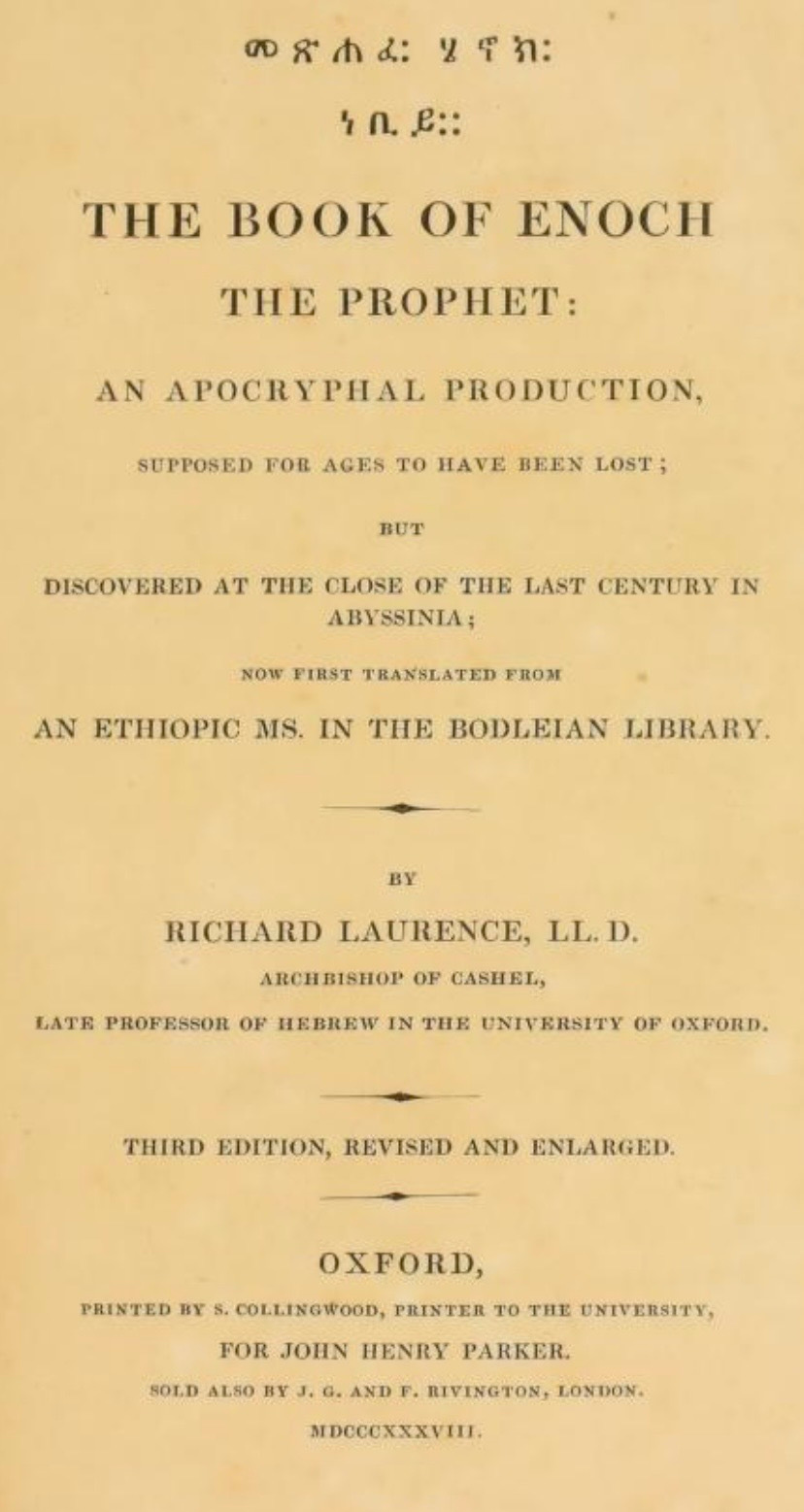
The Book of Enoch is one of the most fascinating ancient works.
Its origins stretch far back, to a time when stories were carried by word and memory before being written down.
Traditionally, it is attributed to Enoch, the great-grandfather of Noah, a man said to have walked closely with God.
Some traditions even suggest that Enoch himself wrote down these visions and teachings, which were later preserved and passed through generations, perhaps even by Noah himself.
The text is a composite of several sections, likely written over centuries, reflecting layers of thought and tradition.
It opens with the fall of the angels, the so-called “Watchers,” who descended to the earth and brought knowledge forbidden to humankind.
From there, it moves into visions of divine judgment, celestial order, and the unfolding of time.
Glimpses into both the heavens and the destiny of humanity.
Though it is no longer part of the canonical Bible for most traditions, its influence is unmistakable.
The Epistle of Jude, for example, quotes directly from Enoch, and many scholars believe its themes shaped early Jewish and Christian thought, especially ideas about angels, judgment, and the coming of a messianic figure.
For centuries it lay hidden, overlooked, or dismissed, only to be rediscovered by scholars in the 18th century.
The text survived largely in Ethiopian manuscripts, preserved in the Ge’ez language, while in the West it was nearly lost, referenced only in fragments or echoed in other writings.
Reading it now, one cannot help but sense the echo of a world where knowledge was treasured and sometimes feared, and where the boundaries between the human, the divine, and the mysterious were observed with awe.
It is a text that challenges, intrigues, and invites reflection, much like the quiet revelations we find in our own lives when we allow ourselves to truly see.
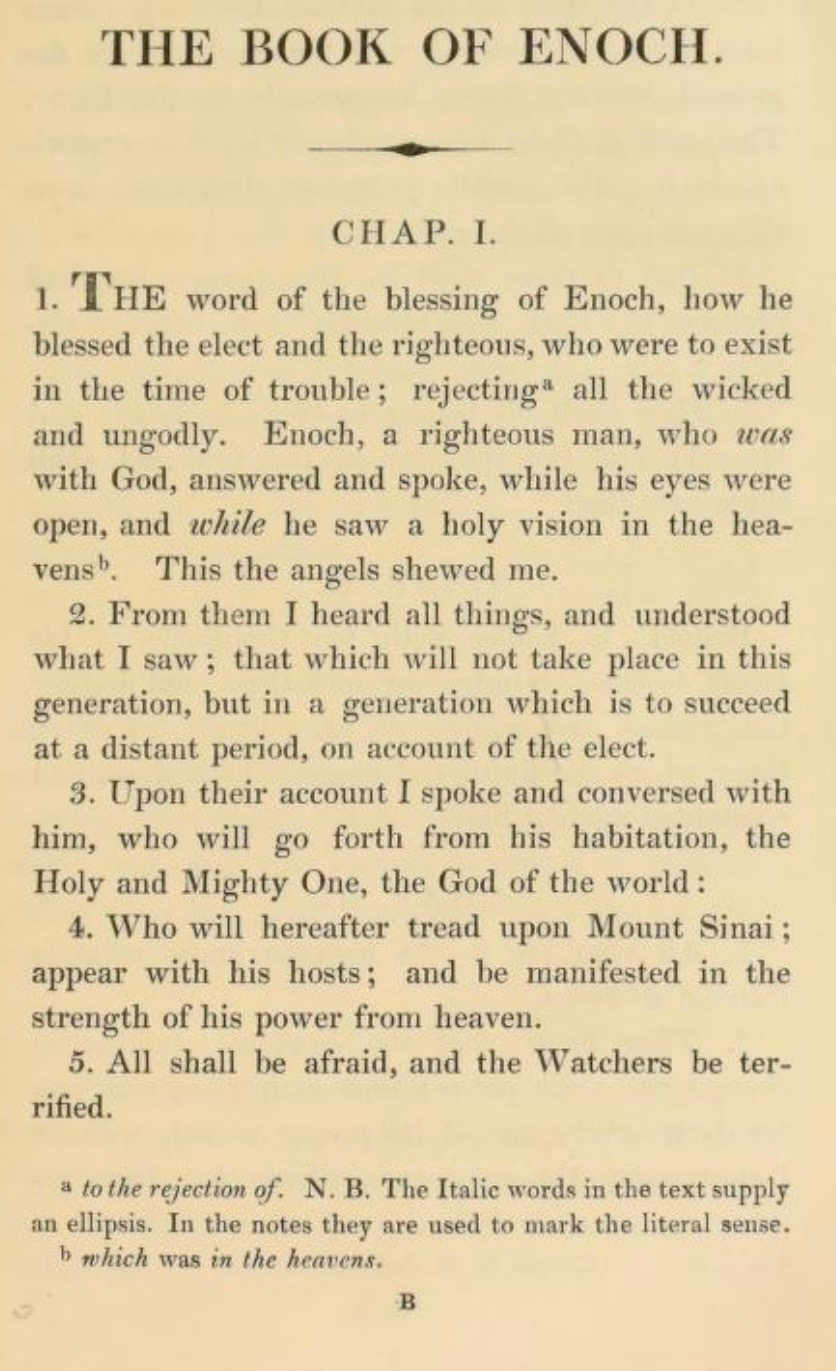
In the words attributed to Enoch, we encounter a blessing, not of ordinary men, but of the elect and the righteous, those who are destined to endure in times of trouble.
It is a blessing that carries both reassurance and warning.
A recognition of the fragile thread that separates the godly from the wicked.
Enoch himself is described as a righteous man, one who “walked with God”, whose eyes were opened to visions beyond ordinary perception.
The angels, it is said, revealed these visions to him, a window into the divine, glimpses of what will unfold not in his generation, but in one far removed, a distant age where the elect will face their trials.
There is a rhythm here between knowledge and patience: Enoch sees, understands, and speaks, but he does so with the awareness that revelation is often for those who come after.
There is a quiet humility in this, insight does not belong to the present alone, nor is it meant for all eyes at once.
The text speaks of the Holy and Mighty One, moving from His habitation to appear upon Mount Sinai, manifesting His power from heaven.
It is a vision that inspires awe, even terror: all shall be afraid, and the Watchers, the angels themselves, shall be terrified.
Here, power is not abstract; it is immediate, overwhelming, and profoundly real.
Reading these passages now, one cannot help but reflect on the duality they present: the blessings reserved for the faithful, the inevitability of judgment, and the knowledge that some truths are revealed only to those prepared to receive them.
There is a philosophical weight here, a meditation on time, justice, and the hidden order of things, on what is seen, what is understood, and what is left for generations yet to come.
The Book of Enoch, in this way, is not merely an ancient text.
It is a lens through which we glimpse the intersection of the human and the divine, the known and the concealed, and perhaps the very measure of what it means to be righteous in a world where much remains hidden, awaiting the eyes willing to perceive it.
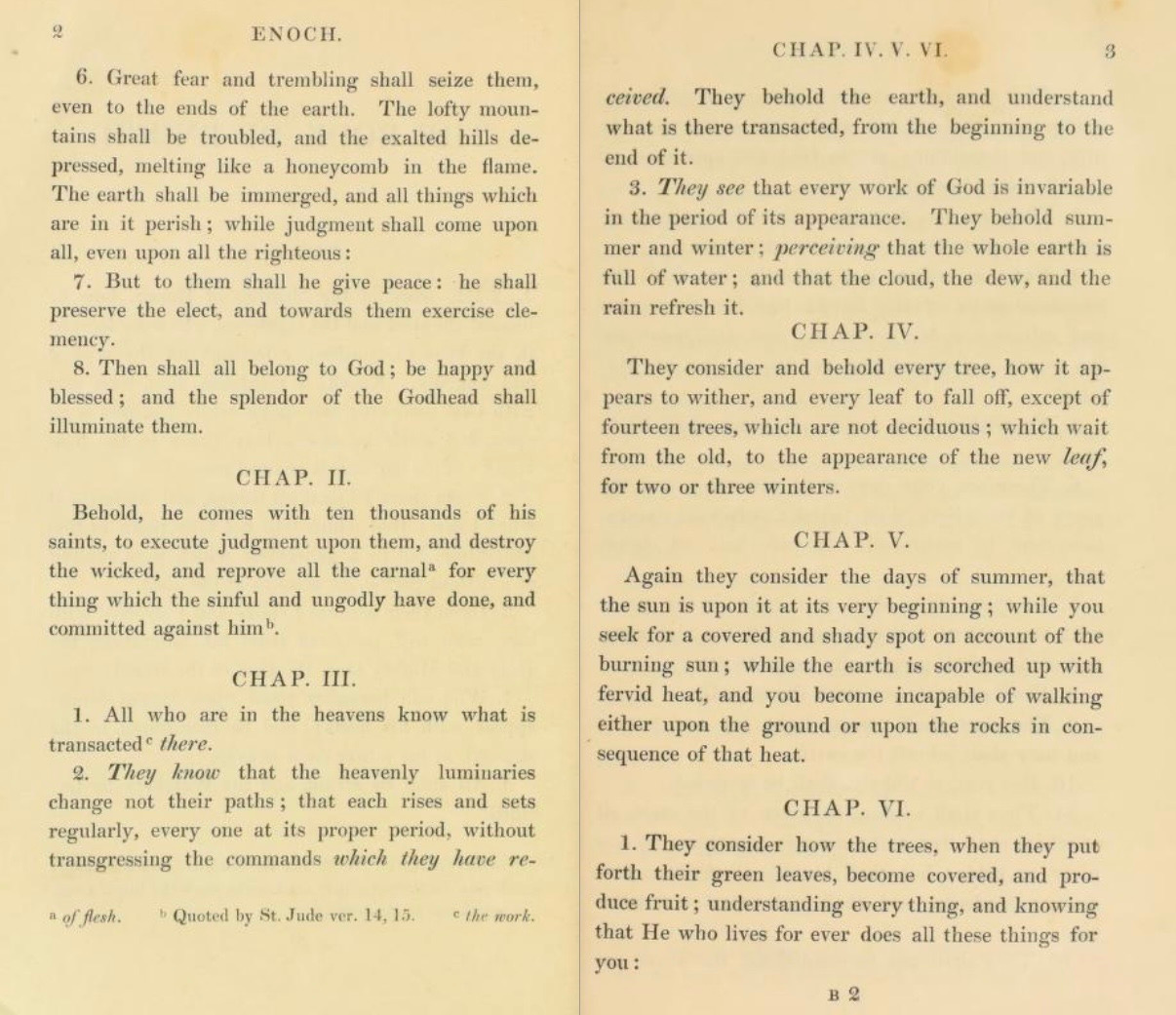
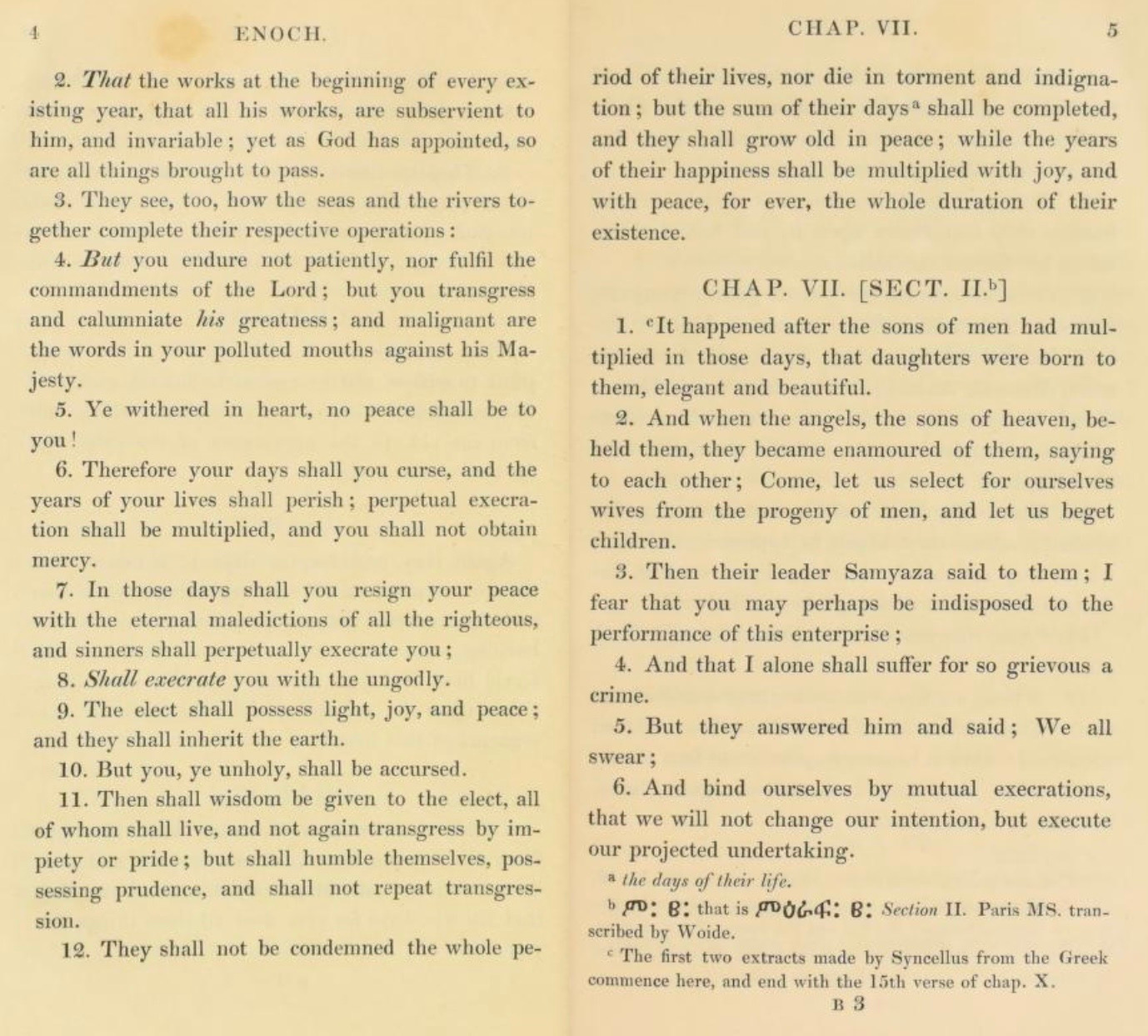
In Enoch’s vision, fear and wonder intertwine, stretching to the ends of the earth, where even the loftiest mountains seem to falter.
The text speaks of mountains melting like honey in the flame, the earth being submerged, and all things perishing under the weight of divine judgment.
Yet even in the midst of this cataclysm, there is hope: the elect are preserved, granted peace, and illuminated by the splendour of the Godhead.
Enoch’s vision reminds us that the universe has order and consequence.
The righteous are blessed; the ungodly face inevitable ruin.
There is an exacting sense of justice here, but it is not arbitrary.
The text emphasises that every action, every life, is observed and weighed, not by human standards, but within a cosmic rhythm that unfolds with precise inevitability.
The heavens themselves, according to Enoch, are not idle.
Angels and celestial beings see the movements of the luminaries, the rising and setting of the stars, and the cycles of nature, the rivers, the seas, the growth and decay of trees, the recurring patterns of summer and winter.
Even the smallest details of creation, the leaves that wither, the fourteen trees that wait through winters, are understood in the divine order.
Nothing escapes the watchful eye of the eternal.
But Enoch also conveys a warning: humanity often fails to see or endure patiently.
We transgress, calumniate, and curse what is beyond us.
Those who harden their hearts will know perpetual execration; their days will be blighted, and their words weighed against them.
In contrast, the elect, those who live humbly, wisely, and in obedience, inherit joy, light, and peace.
They grow old in harmony, their lives measured in fulfillment rather than torment.
Yet the narrative does not shy away from the darker story, one of temptation and moral collapse.
When the angels, the Watchers, behold the daughters of men, desire leads them into transgression.
Their leader, Samyaza, fears the consequences, yet the group binds themselves in oath and proceeds, sowing the seeds of corruption that will reverberate through generations.
Here, Enoch shows us how even celestial beings are not immune to the pull of desire and the weight of choice, reflecting the complex interplay of freedom, responsibility, and consequence.
Through these visions, the text invites reflection.
It is not merely an apocalyptic story; it is a meditation on order, justice, and the hidden rhythms of the universe.
The blessings of the righteous, the judgment of the wicked, the careful patterns of nature, all speak to a world where nothing is arbitrary, and where wisdom is reserved for those prepared to receive it.
Reading Enoch today, one cannot help but feel the tension between fear and hope, destruction and preservation, the seen and the hidden.
It is a reminder that some knowledge endures in shadow, waiting for eyes willing to perceive, hearts ready to understand, and minds capable of reflection.
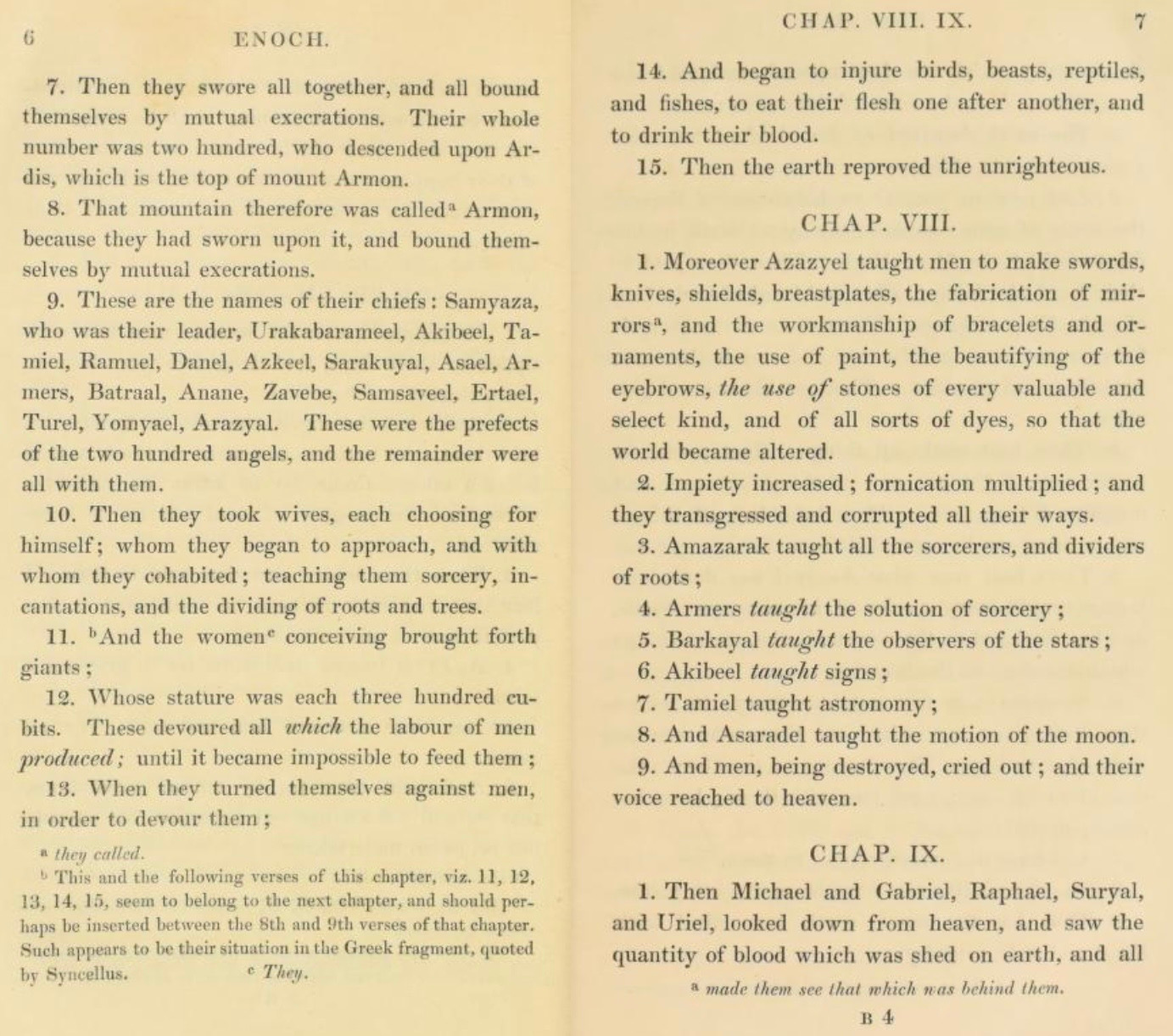
What follows is one of the most unsettling passages in the Book of Enoch, and perhaps one of the reasons it has never sat comfortably within later doctrine.
The Watchers do not fall by accident.
They swear together.
Two hundred of them descend upon the summit of Mount Armon, binding themselves by oath and mutual curse.
The mountain itself is renamed because of this act, a physical place marked forever by a decision freely made.
This is not temptation alone; it is consent, solidarity in transgression.
Their leaders are named one by one.
Names matter here.
Responsibility is not abstract.
These are not vague forces or symbols, but beings with identity and rank.
And having bound themselves, they take wives from among the daughters of men.
What follows is not presented as romance, but rupture.
They teach forbidden things, sorcery, incantations, the cutting of roots, the manipulation of nature.
Knowledge passes downward, but not all knowledge is framed as gift.
Some of it arrives without wisdom, without restraint, without consequence being understood.
From these unions come giants, beings of immense stature and appetite.
They consume the labour of humanity until nothing remains.
And when the earth can no longer sustain them, they turn upon men themselves.
Violence escalates outward, from excess, to domination, to consumption.
The corruption spreads further.
Flesh is eaten.
Blood is drunk.
Animals, birds, reptiles, and fish are destroyed.
The text does something striking here: the earth itself cries out.
Creation is no longer silent.
It reproves the unrighteous.
Another figure emerges, Azazyel, who teaches humanity the making of weapons, adornments, mirrors, and dyes.
Warfare and vanity enter together.
Beauty is no longer simple; it is fashioned, enhanced, manipulated.
The world, the text says plainly, becomes altered.
With this alteration comes multiplication of impiety.
Sorcery is systematised.
Astronomy, signs, the motion of heavenly bodies, knowledge of the cosmos itself, is handed down, but without reverence.
What was once observed becomes controlled.
What was once wondered at becomes used.
And humanity breaks under it.
The cry that rises is not metaphorical.
Men are destroyed, and their voices reach heaven.
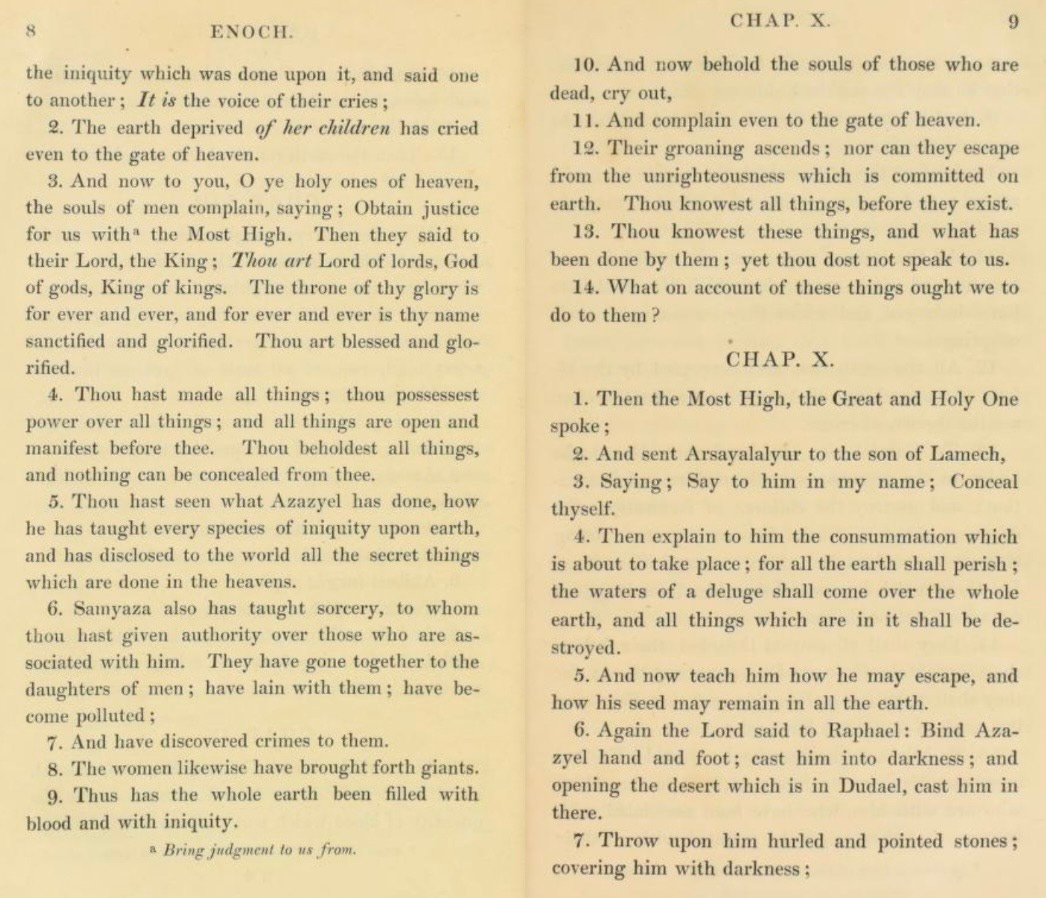
The archangels, Michael, Gabriel, Raphael, Uriel, look down and see the earth saturated with blood.
Their response is not immediate punishment, but testimony.
They speak on behalf of creation itself.
They tell God what has happened, not because He does not know, but because justice, in this text, proceeds through witness.
They recount the crimes. The corruption.
The secrets of heaven disclosed prematurely.
The giants born.
The earth filled with violence.
And again, the souls of the dead cry out.
Their complaint reaches the gate of heaven.
They cannot escape what has been done.
The text lingers here, suffering is not dismissed, hurried past, or spiritualised away.
Only then does judgment begin to move.
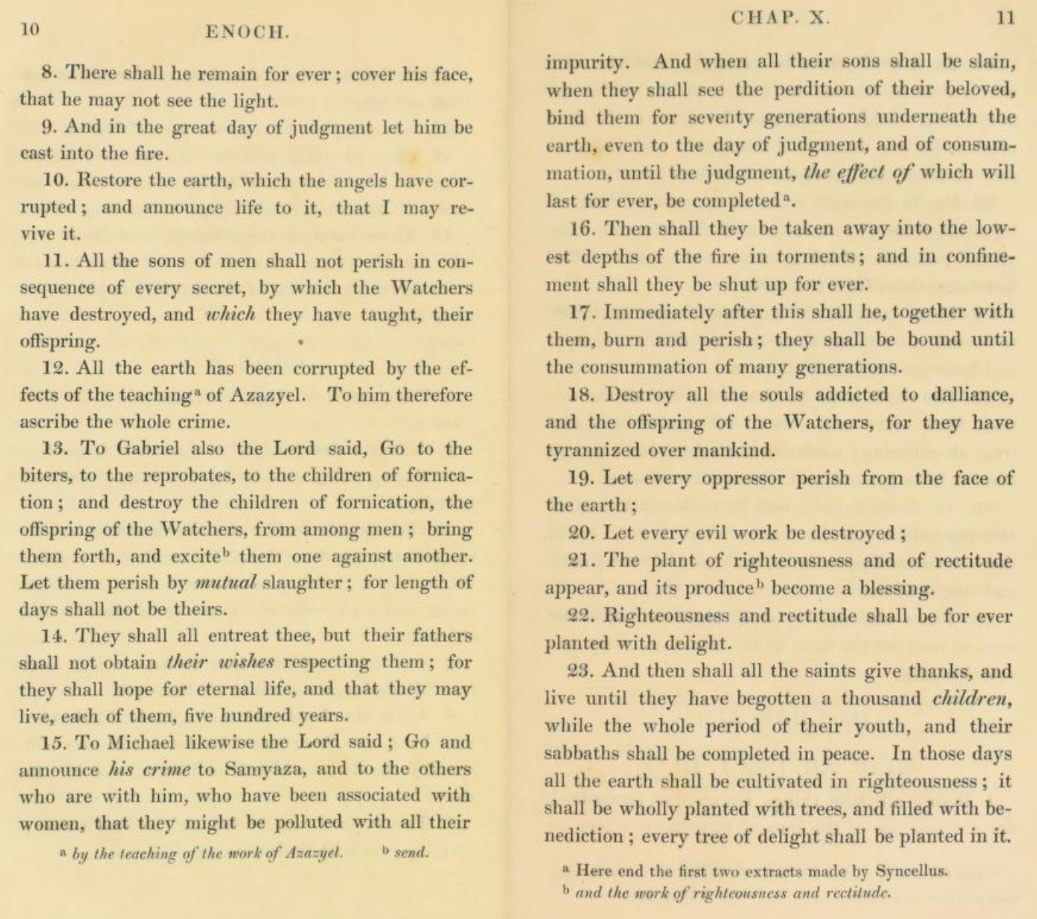
God speaks.
A warning is sent to the son of Lamech, Noah.
He is told to hide, to prepare, because a consummation is coming.
The earth will be washed.
Not corrected.
Not adjusted.
Cleansed.
Instructions are given.
Azazyel is bound hand and foot, cast into darkness, buried beneath jagged stone in the desert.
The knowledge that corrupted the world is restrained, not erased, sealed away.
This is not merely a story of fallen angels.
It is a meditation on knowledge without wisdom, power without humility, and choice without restraint.
The Watchers fall not because they are ignorant, but because they overstep.
Humanity suffers not because it seeks understanding, but because it receives what it is not ready to bear.
And beneath it all is a quiet warning:
not all that can be known should be taken, not all light is given freely, and not all ruin arrives without invitation.
The Book of Enoch now moves from warning to reckoning.
The text makes clear that Azazyel, Samyaza, and the others will face the full weight of their actions.
They are to remain bound, hidden, and in darkness, their sight of the light forever blocked.
Judgment is absolute, enduring “for ever”, yet it is not aimless cruelty.
It is corrective, a restoration of balance to a world marred by corruption.
The corruption of the earth, brought through secret knowledge and misused power, has been vast.
Azazyel’s teachings, sorcery, weaponry, adornment, manipulation of nature, spread across humanity, creating both skill and sin.
But Enoch’s vision assures us: not all of humanity is lost.
The righteous, the elect, the faithful, will be preserved.
Life will endure, and the future of humankind is not extinguished by the recklessness of those before them.
In vivid detail, the text describes how the offspring of the Watchers, the giants, violent and excessive, will be removed.
They have tyrannised over mankind, and their reign is finite.
Judgment descends not only on the fallen angels but on the consequences of their actions, including their children.
Death, punishment, and confinement are the tools by which balance is restored, ensuring that life can flourish uncorrupted.
The vision then shifts from destruction to renewal.
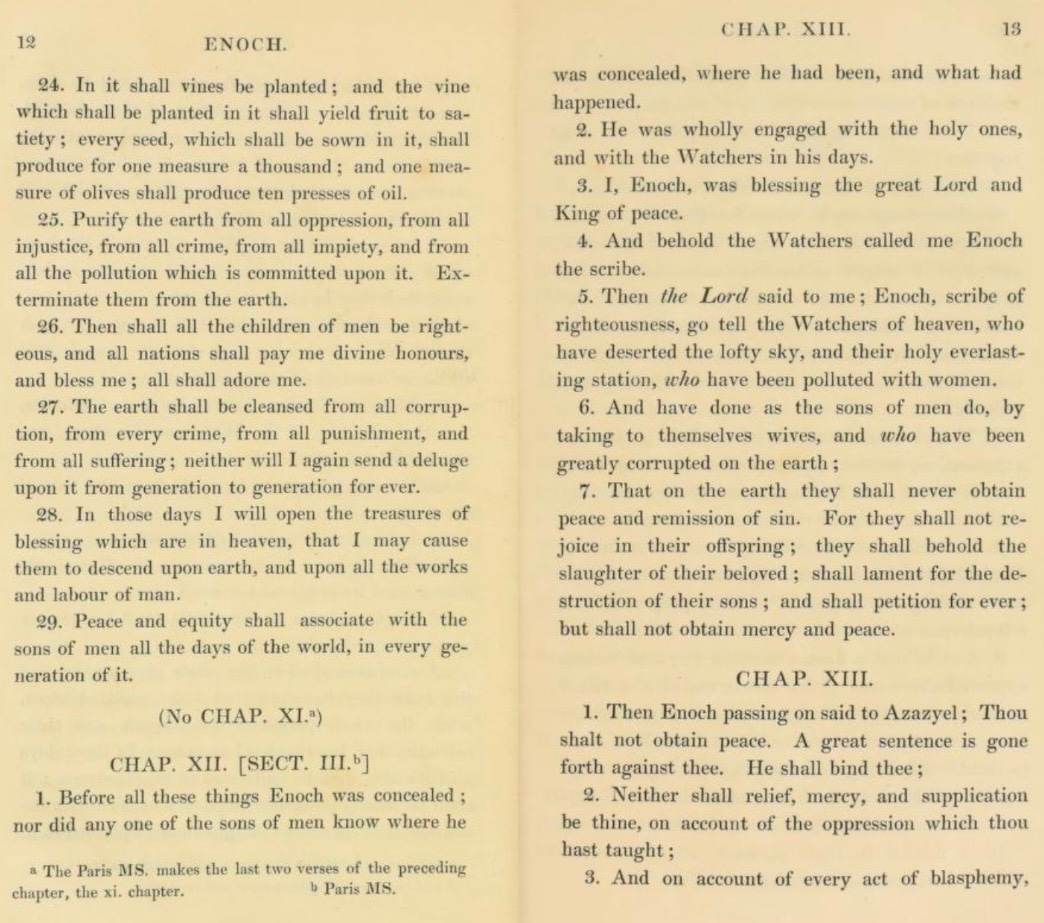
The earth is to be purified, cleansed of oppression, injustice, and crime.
Righteousness and rectitude will be planted like seeds, producing blessings far beyond human comprehension: trees, vines, and olives bearing fruit abundantly; human labour multiplied and honoured.
Peace and equity will accompany humanity through generations, and the divine treasures, once hidden, will descend to bless the world.
The imagery is generous, almost overflowing, underscoring the contrast between previous chaos and the ordered, abundant life that comes from divine justice.
Amid this sweeping vision of restoration, Enoch himself appears as both witness and intermediary.
He is called “scribe of righteousness”, tasked with conveying judgment to the Watchers.
He delivers the truth without compromise: they will not find peace, mercy, or relief.
Their oppression and corruption have consequences that endure, yet humanity, through obedience and virtue, will inherit life in a cleansed and flourishing world.
The text here is at once terrifying and consoling.
It does not shy from the weight of sin or the inevitability of justice, yet it also offers hope.
Humanity is not abandoned; life is renewed.
The future is not erased by the transgressions of the past.
And even in the midst of judgment, there is a profound sense of order, a moral and cosmic balance, one that reminds the reader that righteousness, patience, and wisdom have their own enduring power.
Reading these passages today, one cannot escape a reflection on the nature of consequence, the fragility of power, and the enduring hope of renewal.
Enoch’s vision is not merely a record of punishment; it is a meditation on how corruption can be contained, how knowledge and power demand responsibility, and how, even after great chaos, life and goodness can be restored.
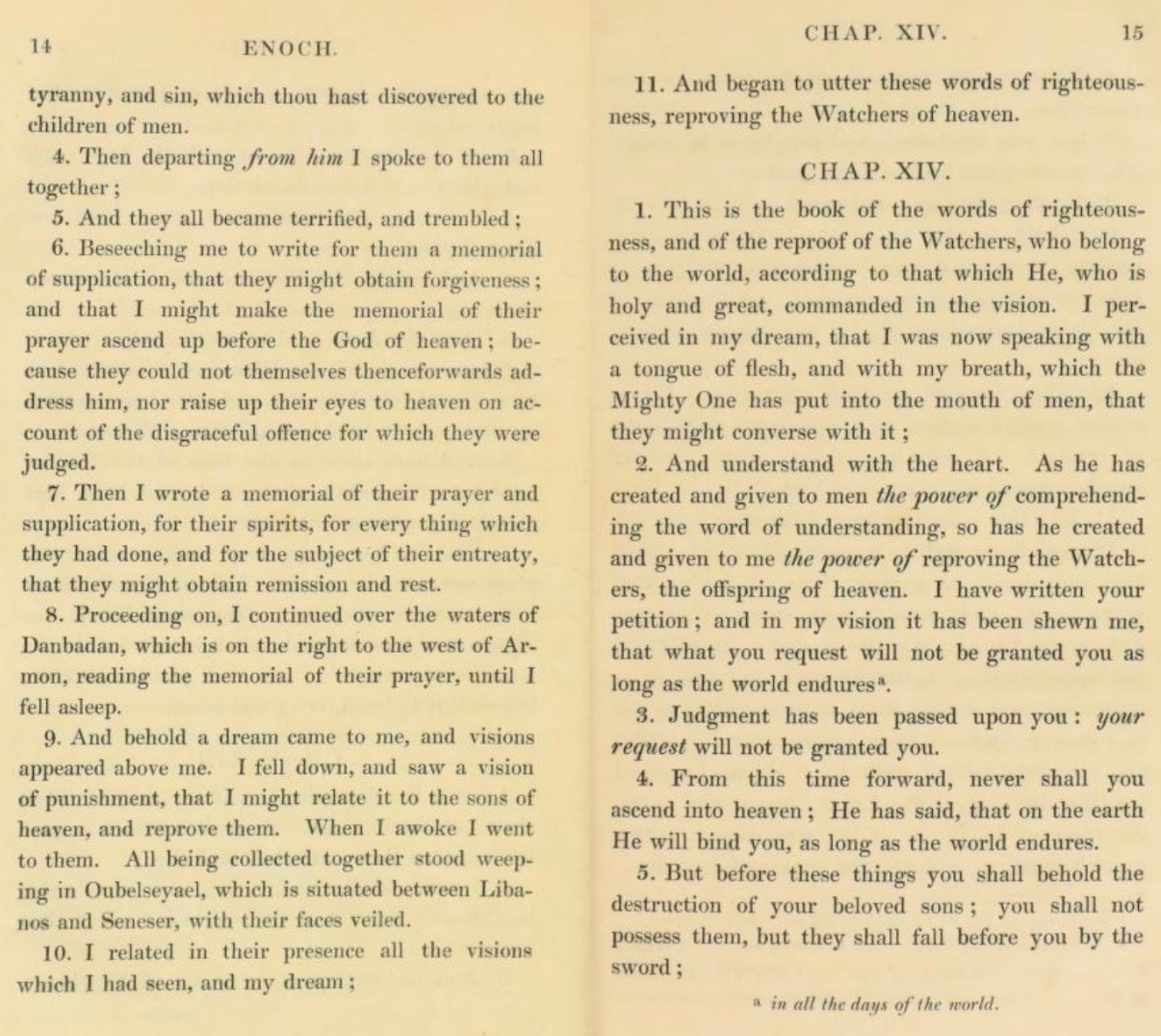
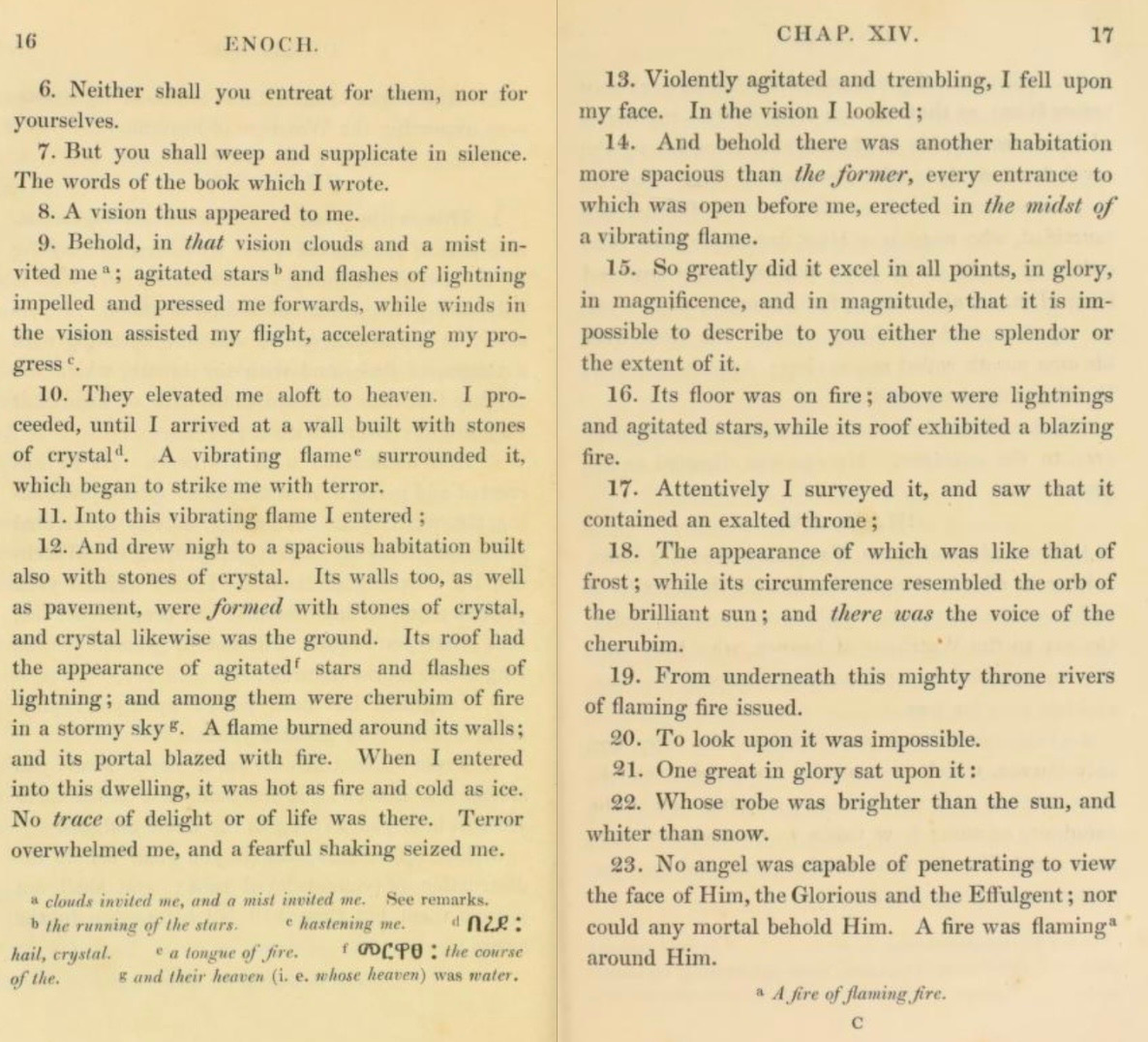
The narrative now turns inward, to Enoch himself, standing between heaven and earth as both witness and scribe.
The fallen angels, trembling with fear, beseech him to write a memorial of their prayers, that forgiveness might reach them.
Yet the text is unflinching: even through Enoch’s mediation, mercy will not come to them in this age.
They have overstepped, and judgment is fixed.
Enoch proceeds, carrying the weight of this task.
He moves over the waters of Danbadan, delivering the memorial, until sleep overtakes him and visions rise above him.
In his dream, punishment appears in vivid form.
He sees the consequences of rebellion, not from a distance, but intimately, as one who must testify to the watchers themselves.
When he awakens, the fallen angels assemble before him, veiled in shame, and he recounts his visions, speaking with words given by God, carrying understanding in both heart and breath.
The text emphasises a profound truth: power, knowledge, and transgression carry their own inevitabilities.
The Watchers’ petition is denied.
They will never ascend again to heaven, never reclaim what was lost.
They must witness the destruction of their offspring and endure silent sorrow, bound to the earth as long as the world endures.
This is justice intertwined with witness: they cannot escape the consequences of their choices.
Then the vision deepens.
Enoch is lifted aloft, carried by winds, clouds, and celestial forces into a realm beyond ordinary perception.
He encounters walls and pavements of crystal, portals blazing with fire, spaces that are both hot and cold, alive with movement and yet utterly devoid of comfort.
The imagery overwhelms: there is no delight here, only the terrifying grandeur of a reality beyond human comprehension.
It is a place where mortal understanding falters, and even the angels themselves cannot penetrate fully.
And then he sees it: a habitation more immense than any before, radiant beyond description.
A throne rises within it, magnificent, terrifying, surrounded by rivers of flaming fire.
From every angle, the space is alive with energy, lightnings, agitated stars, and cherubim of fire.
The Being upon the throne is dazzling: a robe brighter than the sun, whiter than snow.
No angel, no human, can look upon Him directly.
Fire and glory encircle Him, and yet Enoch is permitted to witness, to serve as scribe and intermediary, bridging the incomprehensible distance between divine majesty and earthly understanding.
Here, the text speaks to more than punishment or awe.
It is about the limits of perception, the responsibilities of knowledge, and the humility required to bear witness.
Enoch’s vision is terrifying precisely because it is truthful: there is order, there is justice, there is power beyond reckoning.
Yet there is also a purpose, a continuity that ties judgment and mercy, human action and cosmic consequence, together in a pattern that is at once unyielding and coherent.
Reading this today, one feels the weight of witnessing: to see clearly is not merely to know, but to carry that knowledge.
Enoch’s journey reminds us that some truths are not given lightly, that responsibility comes with understanding, and that even in the presence of absolute power, the call to observe, record, and reflect remains profound.
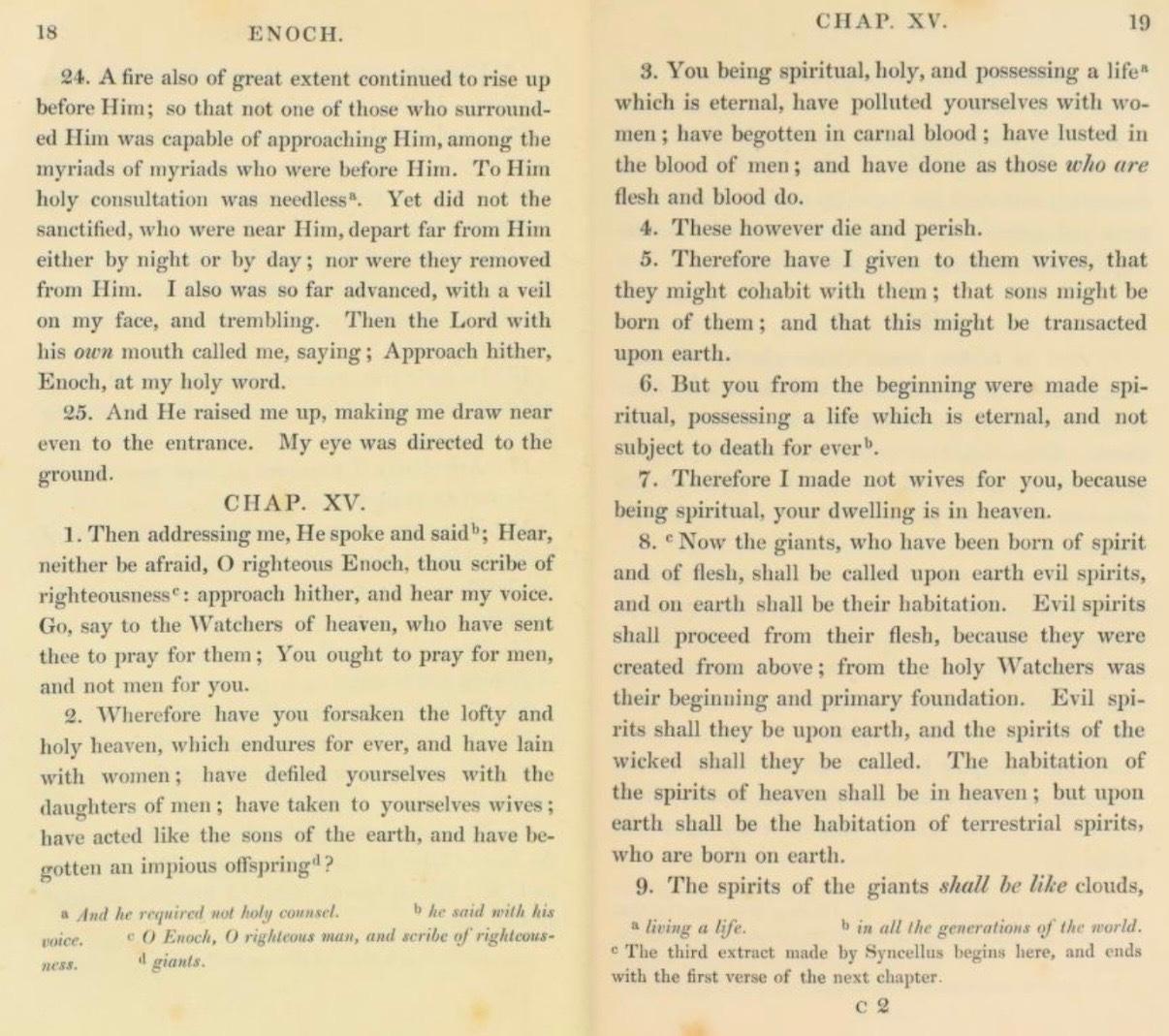
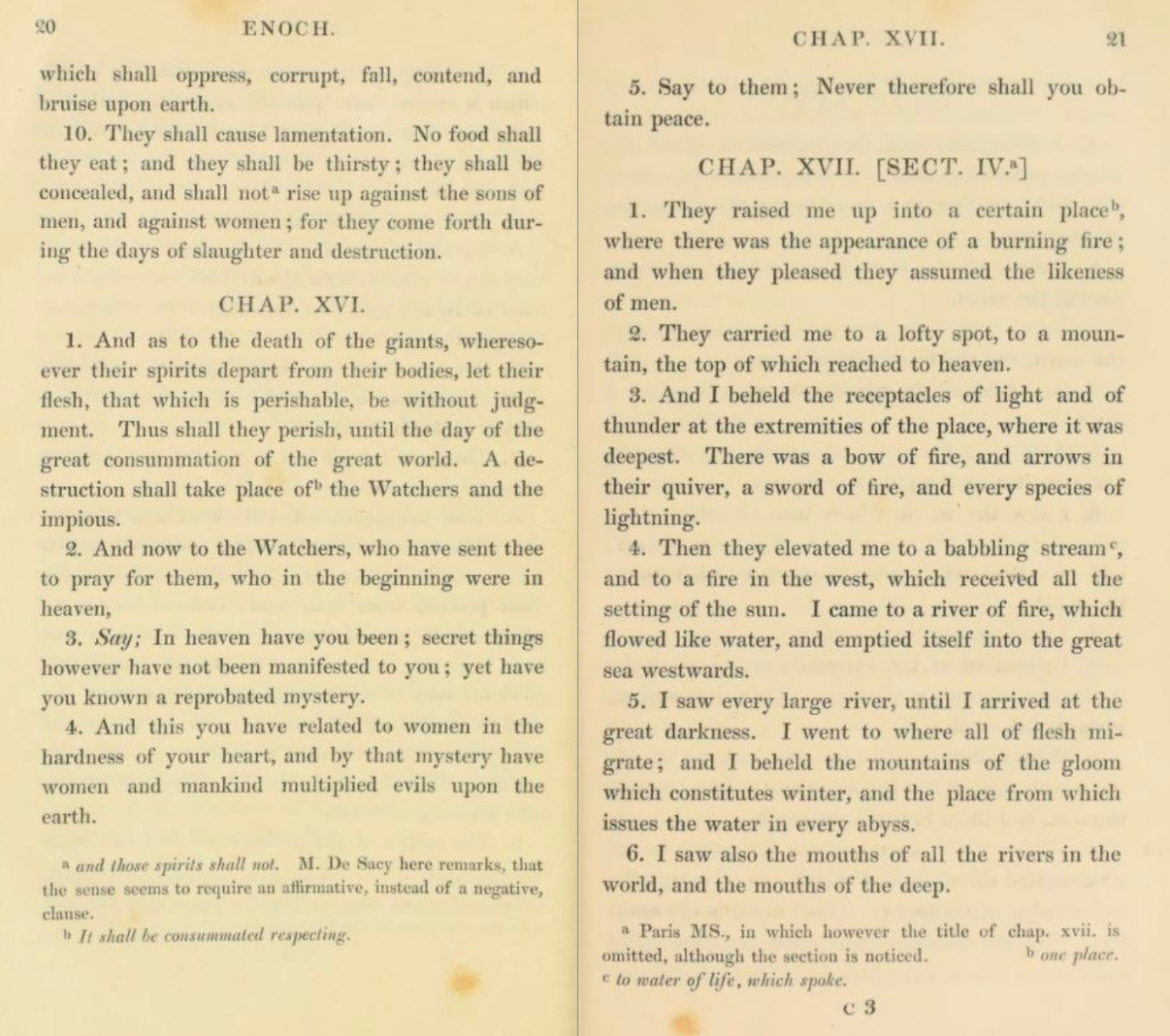
These final passages for today’s article bring us to the culmination of Enoch’s visions, where the consequences of rebellion, the nature of judgment, and the structure of creation itself unfold with overwhelming intensity.
Enoch is raised higher still, approaching the very presence of the Most High.
The fire before Him is vast, impenetrable; no angel among the countless myriads can approach.
Yet the sanctified remain near, day and night, never removed from His radiance.
Enoch, veiled and trembling, is called forward by God’s own voice.
The instructions are direct and unyielding: the Watchers must pray for humanity, not the other way around.
They have forsaken the holy heaven, defiled themselves with women, and begotten offspring contrary to the spiritual order.
The text emphasises the distinction between the spiritual and the carnal.
The Watchers, created for eternity, chose flesh and mortality, and from this transgression arose the giants, beings neither fully divine nor human, destined to become evil spirits upon the earth.
Their existence brings corruption, oppression, and lamentation.
They will not rise in ordinary life, but they haunt the periods of destruction and judgment, a lasting reminder of the consequences of choice and disobedience.
Enoch is shown the fate of these spirits and the perishable bodies of the giants.
They are to perish until the great consummation of the world, their judgment suspended yet inevitable.
The text is clear: what begins in secrecy, in rebellion and misused knowledge, cannot escape divine reckoning.
The Watchers are confronted with the reality that their crimes, once hidden, will bear consequences far beyond their own comprehension, extending into the earth, the lives of men, and the very structure of creation.
Finally, Enoch is carried to the extremities of the world.
He witnesses rivers of fire and light, the great darkness, the mouths of every river, and the hidden sources of the waters that sustain life.
Mountains of gloom, the essence of winter, and the cosmic order reveal themselves in terrifying, sublime vision.
Through this, the text communicates a profound philosophical truth: that every action, every choice, every transgression resonates through the cosmos.
Knowledge, power, and will are inseparable from responsibility, and the world itself reflects the moral order imposed by the Most High.
These passages mark the end of today’s journey into the Book of Enoch.
We have seen the depths of rebellion, the strictness of justice, and the extraordinary majesty of divine vision.
Yet the story does not end here.
In future articles, we will continue exploring Enoch’s role as scribe and mediator, the blessings bestowed upon the righteous, and the enduring lessons that these ancient texts offer for understanding human nature, morality, and the mysteries of creation.
For now, we pause at the threshold, leaving the Watchers bound, the giants consigned to their fate, and Enoch suspended between heaven and earth, a witness to both divine wrath and eternal order.
And so, dear reader, as we approach the close of today’s exploration, we are left with more questions than answers, and yet, perhaps that is the point.
The Book of Enoch, in the sections we have traversed, speaks of rebellion and consequence, of knowledge misused and the weight of choice, of corruption that stretches from heaven to earth, and of justice both terrifying and precise.
It reminds us that actions carry reverberations beyond immediate perception, that wisdom is inseparable from responsibility, and that even the most hidden or secreted truths have their place in the moral order of the world.
One cannot help but wonder why such a text might have been removed from the Bible, if indeed it was.
Perhaps its vision was too vast, too unsettling, or too challenging for human understanding at the time.
Its depictions of angels, giants, and cosmic judgment do not sit comfortably with the familiar narratives of creation and redemption.
Its emphasis on secret knowledge, divine justice, and the consequences of celestial rebellion may have seemed threatening to those who sought to consolidate belief into a more orderly canon.
Yet, within its words, there are messages that resonate with any seeker: the preservation of the righteous, the triumph of virtue over corruption, and the enduring presence of justice.
Enoch’s journey shows that witness carries weight, that to observe is to bear responsibility, and that the path of understanding is often as demanding as it is illuminating.
And so we return to our original thought: perhaps it was removed, perhaps it was hidden, because it challenges, unsettles, and refuses to be simplified.
It is a book that asks the reader to confront the vastness of morality, the consequences of choice, and the nature of divine order.
Its absence from mainstream tradition does not erase its truth; if anything, it makes its recovery all the more vital for those who seek a deeper understanding of humanity, the cosmos, and the enduring dialogue between the two.
For now, we leave it here, dear reader, with questions in our minds and wonder in our hearts, knowing that these are only the first steps in a journey we will continue in future articles, deeper into Enoch, into hidden texts, and into the truths that have waited, patiently, for us to listen.
I don’t write for money, this work exists to be shared, explored, and reflected upon by anyone who wishes to read it.
My hope has always been that it can offer insight, curiosity, or a moment of contemplation without expectation.
That said, if you do choose to support this work in any way, know that it is received with heartfelt gratitude.
Your generosity helps keep these reflections alive, and your kindness is deeply appreciated, though never required.